Video is the format buyers trust most, but not every video does the same job. The types of video content that build awareness are different from the ones that close a deal, and the formats that work on TikTok or Instagram are different again.
This guide covers the main types of video content, the nine formats that work best for marketing and lead generation in 2026, and how to match each one to a funnel stage and channel. We’ll also show how Vidlo makes it easier to collect the most persuasive format of all: real customer videos.
What Are the Main Types of Video Content?
Most marketing videos fall into five broad categories:
Educational videos: Explainers, tutorials, how-tos, and webinars that teach your audience something useful.
Promotional and product videos: Product demos, launch videos, and ads that show what you sell and why it matters.
Social proof videos: Customer testimonials, case studies, and user-generated content (UGC) that let real customers make your case.
Brand and culture videos: Behind-the-scenes clips, team stories, and brand films that build connection and personality.
Live and interactive videos: Live streams, Q&As, and virtual events that let audiences engage in real time.
Short-form social clips are the most common type of video content today, because they are cheap to produce and easy to distribute across TikTok, Instagram Reels, and YouTube Shorts. Customer testimonials and demos, however, tend to have the biggest impact on leads and sales, because they answer the questions buyers ask right before they convert.
The 9 Best Video Content Types for Marketing and Lead Generation in 2026
Choosing a format is a strategic decision, not just a creative one. Each of the nine video types below serves a different purpose, from first impression to final decision. Use them together to move prospects from curiosity to commitment.
1. Video Testimonials: Building Trust and Credibility
Few types of video content build trust faster than an authentic testimonial. In a world saturated with paid ads, peer validation is priceless. Hearing a real customer describe how your product improved their life—or solved a problem—adds a layer of authenticity that no ad can match.
Video testimonials help move prospects from awareness to decision by answering key questions:
“Will this product really work for me?”
“Can I trust this brand?”
“Is this company legit?”
With Vidlo, businesses can collect compelling customer stories with zero production experience. Customers record videos using a simple link or QR code—no camera crew needed.
Why it works: In 2026, ‘faceless’ brands are losing. Real human faces and raw, unedited customer voices are the highest-converting assets for lead generation campaigns, as they provide the social proof needed to overcome buyer skepticism.
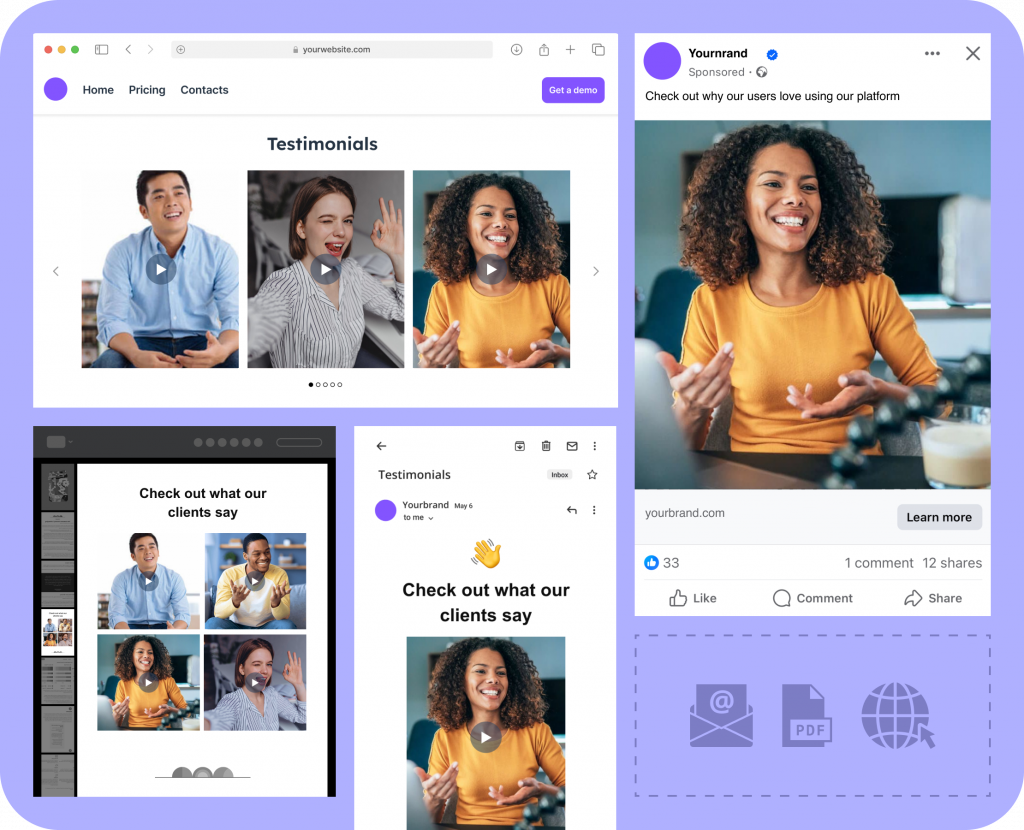
Pro tip: Use testimonials on product pages, in emails, and as social proof in ads.
📖 Related reads:
2. Product Demos: Showcasing Your Product in Action
Product demo videos are essential when your product has features that need to be seen to be believed. Instead of asking people to read descriptions or reviews, let them watch your product in action.
These videos help:
Reduce uncertainty for new buyers
Educate users on key features
Improve post-sale support and onboarding
Vidlo allows brands to collect demo-style content directly from customers using their phones. You can also repurpose testimonials as demos when users show how they use your product in real life—creating social proof and product clarity in one video.
Use case: A skincare brand can use Vidlo to gather user-submitted demo videos showing before-and-after results or daily routines with their products. This format is particularly effective for high-stakes industries like SaaS and fintech, where showing the ease of UI/UX can directly impact sign-ups and user retention.
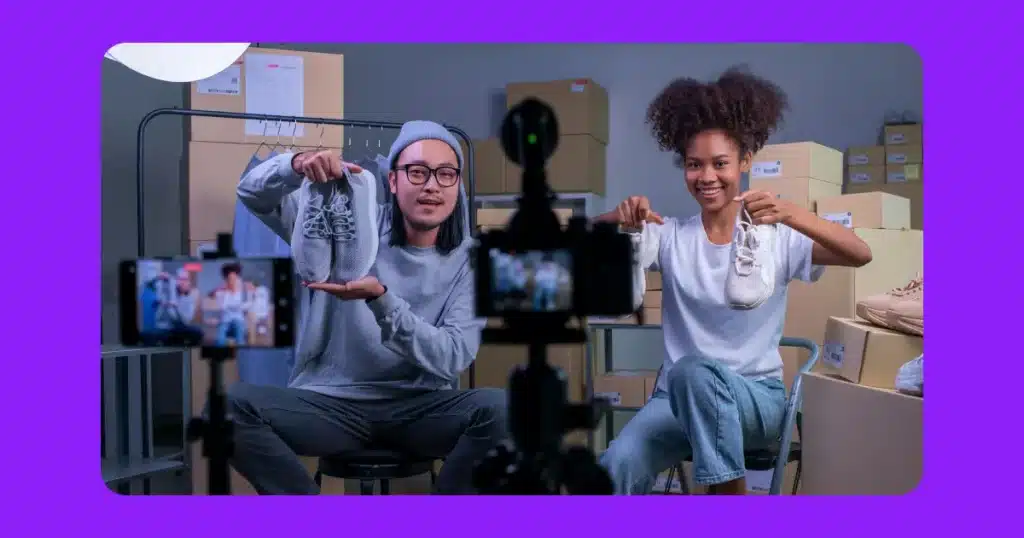
3. Explainer Videos: Simplifying Complex Concepts
Have a service that’s hard to explain in text? Explainer videos are designed to break down complexity into bite-sized clarity. They’re especially useful for SaaS companies, healthcare startups, or financial platforms any business with a slightly steep learning curve.
When done well, these videos:
Increase conversion rates by reducing confusion
Answer FAQs visually and engagingly
Help potential customers understand value quickly
Vidlo makes it easy to incorporate real customer feedback or frequently asked questions into your explainer videos, giving your message more clarity and authenticity.
Bonus tip: Include captions and visual aids to boost accessibility and retention.
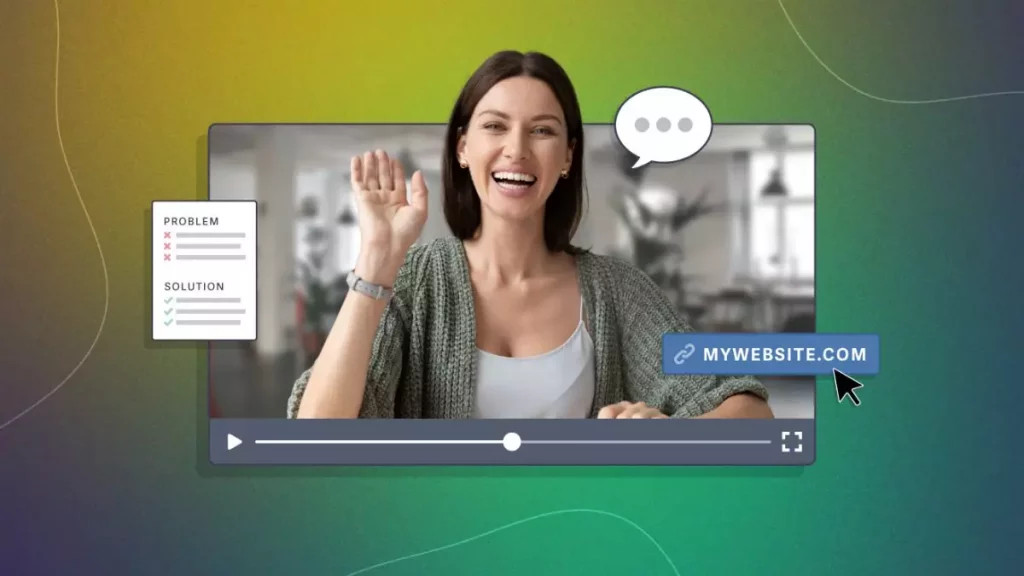
The Winning Formula: A perfect explainer video follows a simple 4-step script: Identify the Problem, introduce your Solution, explain How it Works, and end with a clear Call to Action (CTA).
4. Behind-the-Scenes Videos: Creating Authenticity and Connection
Today’s consumers want more than just products—they want to connect with the people and values behind the brand. Behind-the-scenes videos humanize your business and foster transparency.
Examples of BTS content:
Team prepping for an event or launch
A “day in the life” of an employee
The production or design process
This type of video builds trust, boosts relatability, and often performs well on social media because it feels unscripted and real. With Vidlo, brands can easily capture this content from employees or community members using their own devices.
Pro tip: Encourage staff or partners to record short “check-ins” or BTS clips using Vidlo during key campaigns.
5. Tutorial and How-To Videos: Educating Your Audience
People love learning through video. Tutorials and how-to videos help users understand your product, solve problems, and discover advanced features—often reducing support tickets in the process.
Benefits include:
Enhancing product usage and customer satisfaction
Providing helpful content for SEO
Establishing your brand as an expert
Capturing Search Intent: How-to videos are SEO gold because they directly answer ‘How do I…’ queries, which are among the most common searches today.
These videos can be created in-house, or you can use Vidlo to crowdsource tutorials from power users or influencers. Real users explaining how they use your product creates trust and deeper connection.
Use case: A fitness brand can ask top customers to film workouts using their gear.
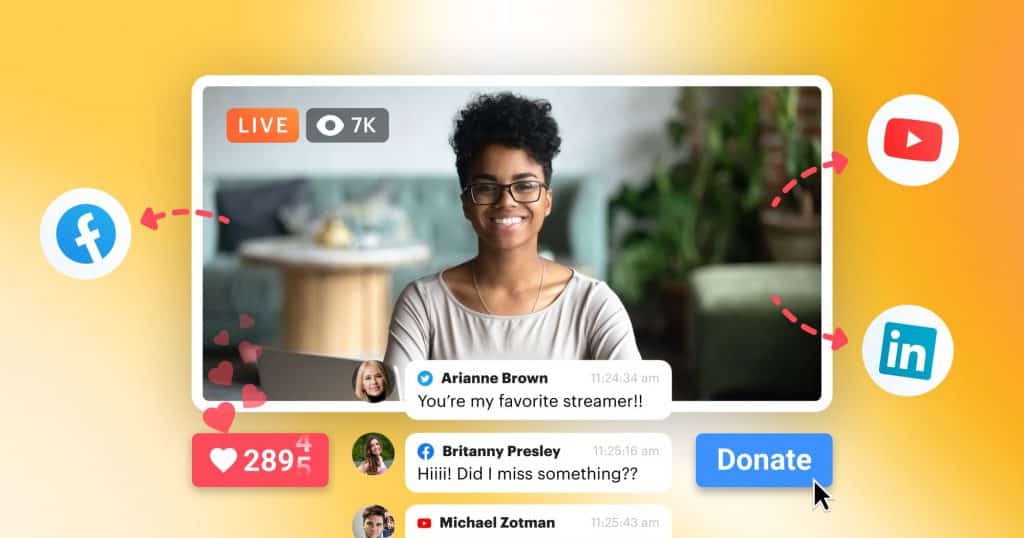
6. Webinar and Live Stream Videos: Real-Time Engagement
Webinars and live streams have grown exponentially, especially for B2B brands. They foster interaction, build community, and give you a chance to answer objections in real time.
But their power doesn’t end when the live stream ends.
With Vidlo, you can:
Turn attendee questions into FAQ videos
Capture post-webinar testimonials to promote future sessions
Live videos make your brand feel accessible. Repurposed clips help build momentum and long-tail content across channels.
7. Social Media Clips: Quick, Snackable Content for Engagement
Short-form content is ruling the internet. Social media video clips (under 60 seconds) are ideal for driving engagement, shares, and awareness.
Formats include:
Product teasers
User-generated content (UGC)
Quick tips or quotes
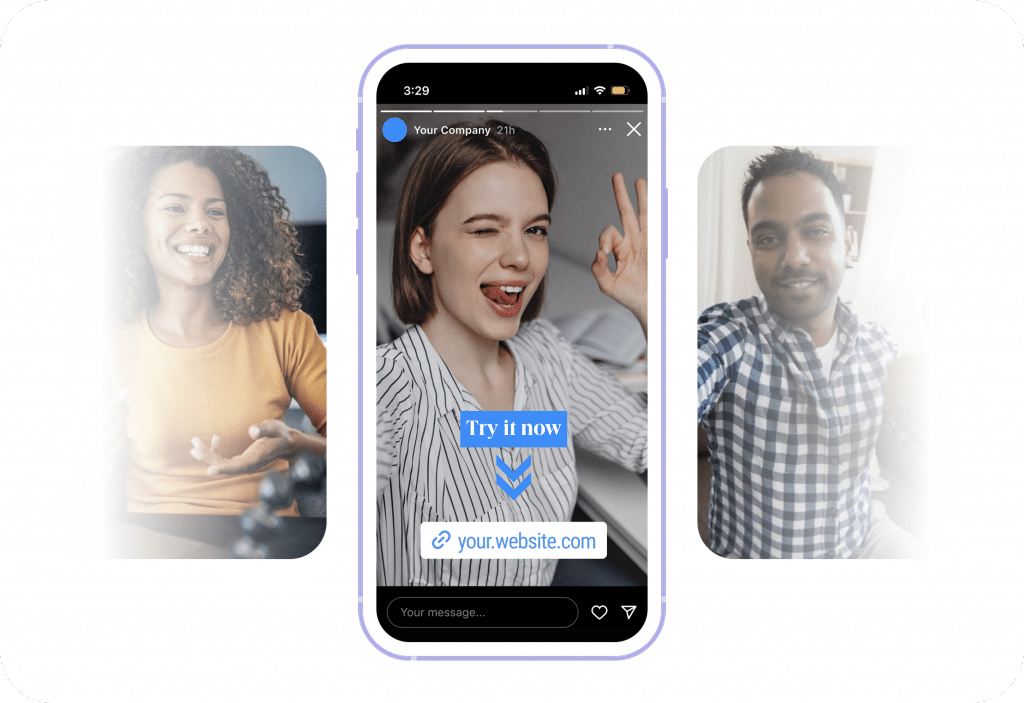
Testimonials as Instagram Reels
Vidlo makes it easy to collect vertical-format UGC from customers that’s ready for TikTok, IG Reels, and Facebook. Short clips build attention and can lead audiences into longer content or your website funnel.
Pro tip: Use trending sounds or captions to increase visibility on social platforms.
2026 Trend Watch: Looped videos and ‘edu-tainment’ (educational entertainment) are dominating TikTok and Reels. Keep your clips under 30 seconds for maximum completion rates.
8. Case Study Videos: Showcasing Real-World Results
Case study videos are highly persuasive for B2B audiences and high-ticket items. Instead of telling, you’re showing a transformation—walking the viewer through the problem, the solution, and the result.
Elements of a great case study video:
Background of the client or customer
Problem or challenge
Your solution in action
Real metrics or results
Vidlo is an excellent platform for collecting client feedback and transforming it into a polished, story-driven case study. These videos work wonders on landing pages, sales decks, and investor presentations.
9. Animated Videos: Adding Fun and Creativity to Your Content
Animated videos blend education with entertainment, making them ideal for explaining abstract or complex topics. With voiceover, icons, and motion graphics, you can bring your brand to life in a colorful, creative way.
While Vidlo focuses on live and testimonial content, animation remains a powerful complement—especially for:
Onboarding flows
Financial services
Explaining new technology
Bonus tip: Combine animation with live testimonial snippets for a hybrid format that’s both credible and captivating.
Which Video Types Work Best at Each Funnel Stage?
The best results come from matching each video type to what the viewer needs at that moment:
Awareness: Short social clips, explainer videos, and behind-the-scenes content that stop the scroll and introduce the problem you solve.
Consideration: Product demos, tutorials, and webinars that show how your product works and help buyers compare options.
Decision: Customer testimonials and case study videos that prove the product works for people like them and remove the final doubts.
Best Video Types for SaaS and B2B Demand Generation
For SaaS and B2B teams, the formats that consistently support demand generation are short product demos for feature clarity, webinars and live sessions that capture leads in exchange for expertise, and customer testimonials and case study videos placed on pricing pages, in sales emails, and in retargeting ads. Pair a short demo with a relevant customer story and you cover both “what does it do?” and “does it work for teams like mine?”
Types of Video Content for Social Media
Each platform rewards a slightly different format:
TikTok, Instagram Reels, and YouTube Shorts: Vertical, under-60-second clips with a hook in the first few seconds, such as quick tips, UGC, reactions, and short testimonials.
LinkedIn: Short expert takes, customer stories, behind-the-scenes clips, and webinar highlights, with captions for silent viewing.
YouTube: Longer tutorials, product walkthroughs, webinar recordings, and case studies people search for.
Facebook and Instagram feed: Short testimonials, product demos, and community content that also work as paid ads.
How to Create High-Impact Video Content
High-impact video content is video that changes what the viewer does next: they remember the brand, trust it more, or take action. Whatever the format, the same principles apply:
One clear goal per video: Awareness, education, or conversion, not all three.
A strong hook in the first seconds: Lead with the problem, the result, or a real reaction.
Real people over polish: Customer and employee voices usually outperform scripted brand messages.
Built for the platform: Vertical and captioned for social, longer and searchable for YouTube and your website.
A clear next step: Tell viewers exactly what to do after watching.
Diversify Your Content Strategy with Engaging Video Content
From trust-building testimonials to bite-sized social clips, diversifying your video content for marketing helps you speak to customers at every stage of their journey.
Whether you’re a startup or an enterprise brand, the future of marketing is video—and the future of video is authentic, customer-led storytelling.
With Vidlo, you can collect, organize, and publish the most impactful videos your audience wants to see. From testimonials to case studies and behind-the-scenes content, Vidlo helps you turn everyday moments into marketing magic—without a film crew.
| Video Type | Best For | Funnel Stage |
| Testimonials | Trust & Conversion | Decision (Bottom) |
| Explainer | Education | Awareness (Top) |
| Product Demo | Feature Clarity | Consideration (Mid) |
| Social Clips | Viral Reach | Awareness (Top) |
| Case Studies | Proven Results | Decision (Bottom) |
Ready to get started?
👉 Visit Vidlo and start capturing real customer stories that move the needle in 2026.
Frequently Asked Questions About Video Content Types
What are the different types of video content?
The main types are educational videos (explainers, tutorials, webinars), promotional videos (product demos, launch videos, ads), social proof videos (testimonials, case studies, UGC), brand and culture videos (behind-the-scenes, team stories), and live or interactive videos (live streams, Q&As, virtual events).
What is the most common type of video content?
Short-form social video is the most common type today. Clips under 60 seconds on TikTok, Instagram Reels, and YouTube Shorts are quick to produce and easy to share, which is why most brands publish them more often than any other format.
Which type of video content is best for lead generation?
Use a mix. Explainers and social clips attract attention, demos and webinars capture interest and contact details, and customer testimonials and case studies convert interest into leads and sales. If you can only start with one, customer testimonials usually have the most direct impact on conversions.
How do I choose the right video type for my business?
Start with your goal and your audience’s stage in the funnel. Use short educational or behind-the-scenes clips to build awareness, demos and tutorials to support evaluation, and testimonials or case studies to help people decide. Then adapt the format to the platform where it will be published.