


Traditional ads tell people how great a product is, but testimonial advertising lets your customers do the talking. By shifting the message from the brand’s voice to an authentic customer’s voice, you build immediate social proof, reduce buyer hesitation, and increase conversion rates across your entire marketing funnel. The most effective testimonial ads are never generic; they focus on a specific problem, a chosen solution, and a measurable outcome that potential buyers can easily relate to.
As a core trust asset, testimonial advertising is a marketing strategy that integrates real customer reviews, video quotes, or success stories into paid or organic campaigns to build credibility near key purchase decision points. Whether you are leveraging short text snippets on a SaaS landing page or dynamic video montages on TikTok, understanding how top brands execute this strategy is key to scaling your ROI.
What You Will Learn in This Guide
To help you master this strategy, we have broken down 15 standout campaigns across e-commerce, B2B SaaS, and service industries. By the end of this guide, you will discover:
The Problem-Solution-Outcome Framework: How to structure testimonials so potential buyers instantly visualize their own success.
Platform-Specific Tactics: The exact formats that drive the highest engagement on LinkedIn, Instagram, and TikTok.
The Power of Real Human Voices: Why automated, real human video testimonials consistently outperform over-produced corporate videos.
While analyzing these examples, you’ll notice that video is the most dominant and persuasive format. If you want to effortlessly scale your content creation, Vidlo is a video testimonial & UGC software that automates the collection of real human video testimonials. Instead of producing artificial AI content, Vidlo empowers your actual customers to record authentic video reviews directly through a simple link or QR code—giving you a continuous stream of high-converting marketing assets.
Let’s dive into the 15 real-world examples to see these strategies in action.
What is testimonial advertising?
Testimonials are a great form of content to feature in your brand’s advertising. Since testimonials are made by real customers, they are authentic, which allows potential customers to relate to it. When your brand speaks highly of your offerings, potential customers may not believe you. But, when your customers provide their opinion and their experience with your brand, it is more authentic. Video testimonials examples are particularly powerful, as they capture the genuine emotions and reactions of satisfied customers, making the testimonial even more compelling and relatable.
Also, since your customers know what points are most important to mention in their testimonial, they are able to answer questions that potential customers might have. Then, they will connect more with what is being said in the videos, since it is as if it is coming from their point of view.
Additionally, since testimonials are more authentic, they will cause your advertising campaigns to have more engagement, and an increased conversion rate. Even better, your brand is able to hear how your customers truly feel about your brand, and learn how you can improve your brand to fit their needs better.
To maximize the impact of your testimonial advertising, consider implementing testimonial SEO strategies.
Why testimonial advertising works?
Testimonial advertising works because it replaces brand claims with real customer experiences. Instead of a company telling potential buyers how great a product is, testimonials allow customers to hear the story directly from people who have already used it. This shift in voice creates stronger authenticity and credibility, which are two of the most important factors influencing modern purchase decisions.
At its core, testimonial advertising leverages social proof. When people see others describing positive experiences with a product or service, it reduces uncertainty and perceived risk. Potential customers are more likely to trust someone who has already gone through the same problem and found a solution. This psychological effect helps brands overcome buyer hesitation and move prospects closer to making a decision.
Testimonials also help potential customers visualize results. A well-written testimonial often explains the problem a customer faced, the solution they chose, and the outcome they experienced. This narrative structure makes it easier for new buyers to imagine how the product might work in their own situation. The clearer the outcome, the stronger the persuasive impact.
Another reason testimonial advertising works is emotional relatability. Seeing or hearing a real customer—especially in video testimonials—adds tone of voice, facial expressions, and personal context to the message. These human signals make testimonials feel more genuine than traditional advertising copy.
Finally, testimonials strengthen trust throughout the marketing funnel. They can attract attention in social media ads, provide reassurance on landing pages, and reinforce credibility near pricing or checkout pages where customers are making final decisions. When used strategically, testimonial advertising becomes more than just customer feedback—it becomes a powerful trust signal that influences conversion.
Types of Testimonial Advertising (With Examples)
Testimonial advertising can take many forms depending on the platform, the content format, and the stage of the customer journey. Some testimonials appear as short quotes on landing pages, while others become full video ads on social media. Understanding the different formats helps marketers choose the right type of testimonial for their campaign goals.
| Testimonial Type | Common Format | Where It Appears | Why It Works |
|---|---|---|---|
| Video Testimonial Ads | Short customer videos, interviews, or UGC clips | YouTube, Instagram, TikTok, landing pages | Shows authentic emotion and non-verbal trust signals |
| Text Testimonial Ads | Customer quotes or review snippets | Landing pages, display ads, websites | Quick to read and easy to scan |
| UGC-Style Testimonial Ads | Customer-recorded videos or social media posts | TikTok, Instagram, paid social ads | Feels organic and relatable to audiences |
| Social Media Testimonial Ads | Reposted reviews, comments, or user posts | Instagram, Facebook, LinkedIn | Leverages real community feedback |
| Landing Page Testimonials | Customer stories with photos or metrics | Product pages, SaaS landing pages | Reduces purchase hesitation near the CTA |
| Case Study Testimonials | Detailed customer success stories | B2B websites and sales materials | Provides deeper credibility and measurable outcomes |
Now that we’ve explored the main formats of testimonial advertising, let’s look at real-world examples from leading brands. The following campaigns show how companies use video testimonials, social proof, and customer quotes to create persuasive ads that build trust and influence buying decisions.
15 Testimonial Examples in Advertising
Testimonial advertising is one of the most effective marketing strategies out there — and for good reason. Whether it’s a video testimonial ad on social media, a powerful quote on a landing page, or a full-blown case study, real customer voices create social proof that builds trust and influences buying decisions. From classic advertisements with testimonials to modern examples of testimonial propaganda that double as compelling user-generated content, these brands have mastered the art of turning customer success stories into marketing gold.
We’ll break down 15 standout examples of testimonial advertising techniques in action — showcasing how authentic customer reviews and real-life experiences can drive results, attract potential customers, and prove that this form of advertising works.
1. E.l.f. Cosmetics – Video Testimonial
2. Gusto: Text/Image Testimonial
3. Microsoft – Video & Text Testimonial
4. Canva – Image/Text Testimonial
5. Salesforce – Text Testimonial
6. Peloton – Video/Text Testimonial
7. Black Girl Sunscreen – Video Testimonial
8. Orange Theory – Image/text Testimonial
9. Marriott Bonvoy – Video Testimonial
10. Loom – Text Testimonial
11. Glossier- Video Testimonial
12. Warby Parker – Carousel Testimonial
13. Duolingo – Video Testimonials
14. Airbnb – Text Testimonial
15. Notion – Text Testimonial
1. E.l.f. Cosmetics - Video Testimonial
On E.l.f Cosmetics’ social media, they feature many videos of customers using their products. In this video, the customer shares the foundation they used and how the foundation lasted a full travel day.
She also discussed the benefits of the product, such as the satin finish and buildable coverage it provides. This testimonial is impactful since we are able to see, and hear, why the customer enjoyed the product. In the description, E.l.f also outlines reasons why customers will love the product. This post is authentic, and convinces potential customers to check out the foundation for themselves, thus making it a successful testimonial ad.
Creating effective testimonial ads often involves more than just showcasing customer feedback. Many successful campaigns incorporate UGC hooks.
These hooks can be anything from catchy hashtags to interactive challenges that prompt customers to share their experiences. By blending professional advertising techniques with authentic user content, brands can create a powerful synergy that resonates with potential customers and boosts the overall impact of their testimonial-based campaigns.
Type: Video testimonial ad (social media UGC-style)
Why This Testimonial Ad Works
Shows a real customer using the product in a natural setting
Highlights specific product benefits instead of generic praise
Uses video to convey authentic reactions and tone of voice
Feels organic and relatable, similar to beauty vlog content
Helps potential buyers visualize how the product performs in real life
2. Gusto: Text/Image Testimonial
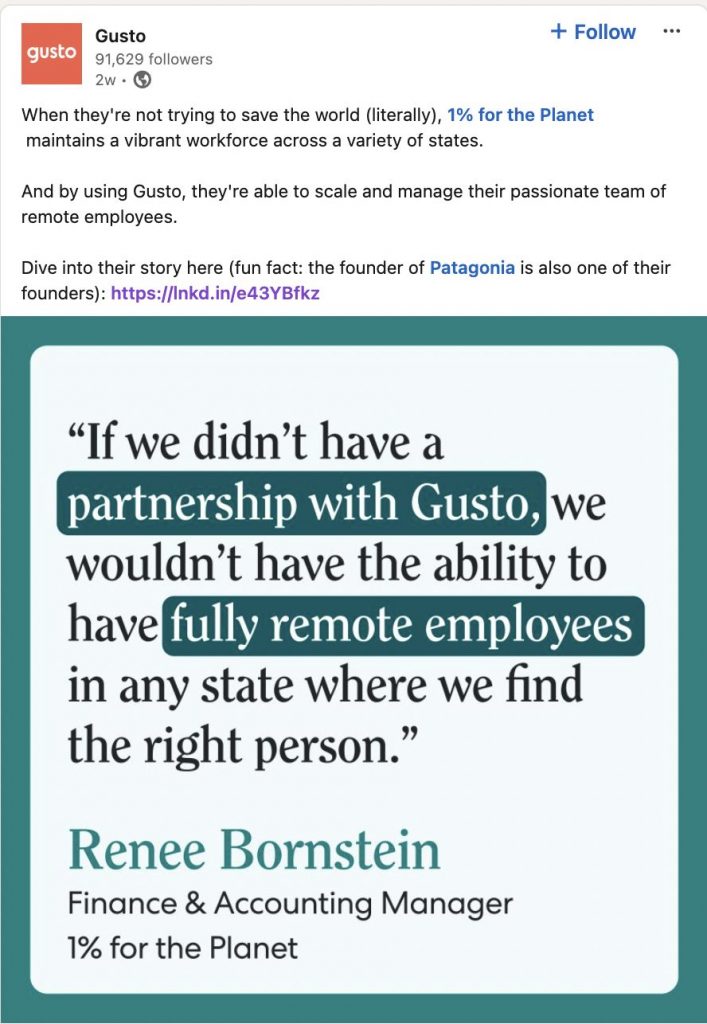
Gusto features a testimonial quote from Renee Bornstein of 1% for the Planet! Bornstein shares how Gusto helps her brand be able to have remote employees. Gusto also features a customer story that goes more into detail about how they help 1% for the Planet.
Bornstein shares, “Gusto is great for us. It’s really easy for me to manage, as the person who actually runs payroll, but it’s also really nice for our employees. The platform is easy for them to use. It’s been really helpful for us. And people love getting the cute [payday] emails”.
This testimonial is a great example of how customers can speak on how a brand’s services made their tasks easier to do. Companies that might be struggling with running payroll, or struggling with sending payments to their remote employees. So, this testimonial provides them with information they need to know if they are looking into using Gusto.
Type: Text testimonial ad (image + quote format)
Why This Testimonial Ad Works
Uses a real customer quote, increasing credibility and trust
Highlights a specific operational benefit rather than vague praise
Features a recognizable organization, strengthening authority
Keeps the message short and easy to scan
Shows how the product solves a real business problem
3. Microsoft - Video & Text Testimonial
On LinkedIn, Microsoft posted a video about how Unilever uses their application, Azure, to help them do their research. Microsoft also links a blog post they made describing in detail the different ways Unilever utilizes Azure.
Alberto Prado from Unilever states “Using advanced computing power and AI, we are able to compress decades of lab work into days, accessing a level of insight we could not previously have imagined. This technological leap, coupled with our vast repository of proprietary data and a century of expertise in personal and household care, means our scientists are able to lead the industry in developing the next generation of consumer goods”.
This statement shows how Microsoft’s application is saving them time and allowing them to process data at an impressive rate. The testimonial provided by Unilever expresses how Microsoft has impacted their brand in a positive way, which is compelling to other brands in their industry.
Type: Video testimonial ad (B2B social media / LinkedIn)
Why This Testimonial Ad Works
Features a well-known enterprise brand, increasing credibility
Highlights a specific and measurable benefit (time saved in research)
Combines video storytelling with additional written context
Targets a professional audience on LinkedIn where B2B buyers are active
Demonstrates real-world use of the product rather than abstract claims
4. Canva - Image/Text Testimonial
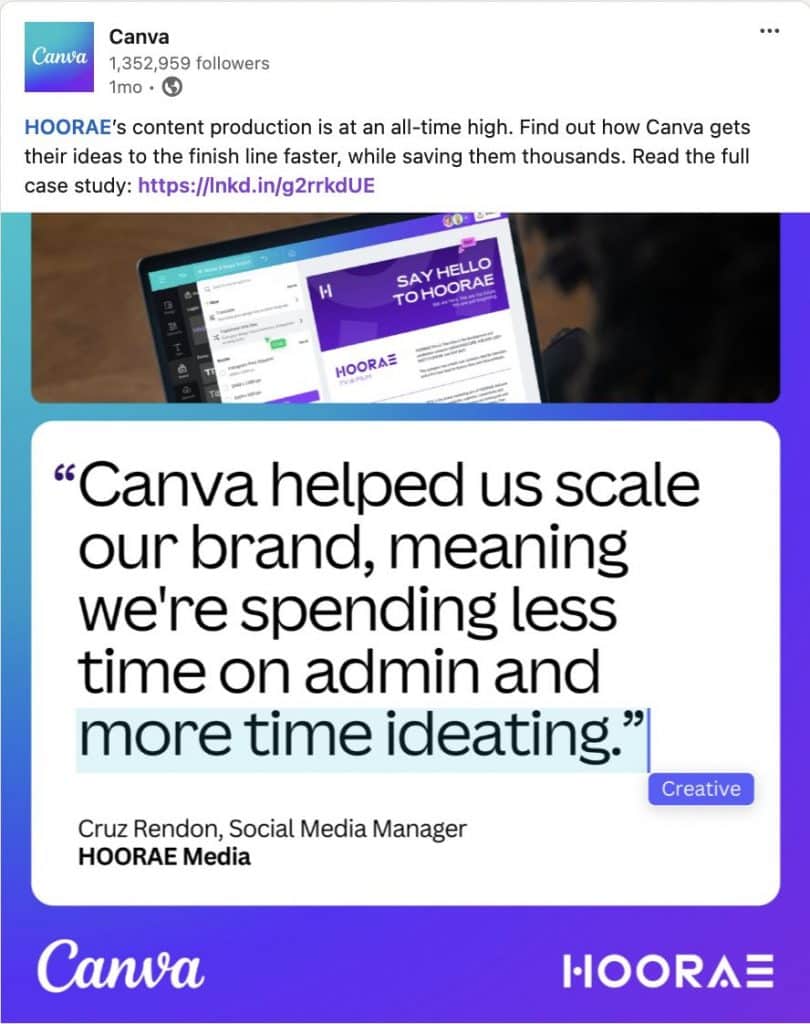
Canva shares a LinkedIn post about how Hoorae saves time and money by using their platform. In the post, they showcase images that show the impact of Canva on their brand. The second slide shows that they had an increase in content produced, while their production time decreased.
This testimonial allows brands to see how Canva can increase their productivity and save them time. They utilized images to get across 3 main points – each point showing how Canva helps brands. This is a great example of how your customers’ positive experiences can convince potential customers to check out your brand.
Type: Image/Text testimonial ad (LinkedIn carousel format)
Why This Testimonial Ad Works
Combines visual storytelling with a short testimonial message
Highlights measurable outcomes such as increased productivity
Uses a carousel format that encourages interaction and scrolling
Makes the value proposition clear in just a few seconds
Shows a real business use case rather than abstract benefits
5. Salesforce - Text Testimonial
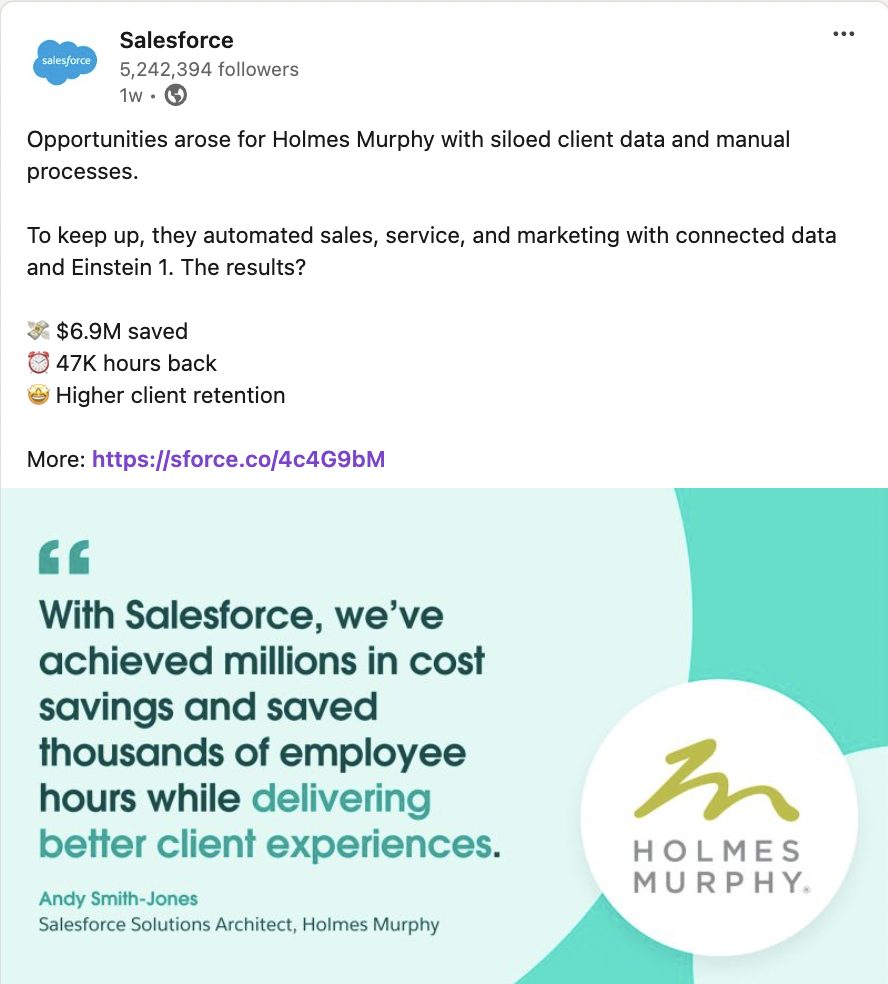
In this post, Salesforce features a written testimonial from Holmes Murphy! Their testimonial states 3 benefits from using Salesforce: they saved money, saved time, and delivered better client experiences.
Additionally, in their customer story on Salesforce’s website, they show what Salesforce products were used, what their challenges were, and how Salesforce solved them. This information is extremely helpful to potential customers, since it shows them what challenges can be solved with Salesforce’s products, and they can understand how Salesforce can help their brand too.
Type: Text testimonial ad (B2B customer success story)
Why This Testimonial Ad Works
Highlights clear business outcomes such as time and cost savings
Features a real company using the product in a professional context
Combines a short testimonial with a deeper customer story
Helps B2B buyers understand how the platform solves real challenges
Builds credibility through practical, experience-based feedback
6. Peloton - Video/Text Testimonial
Peloton uses a unique format for their testimonials. They put a quote from a customer over a video they made. The quote is from a Peloton member, stating that the running surface is the best they have come across. Since a lot of runners are looking for the best machines to run on, this quote shows them that Peloton is the best in their opinion!
The video also captures people’s attention and allows current customers to comment their opinions on the product as well, which increases engagement for Peloton.
Type: Video testimonial ad (video + customer quote overlay)
Why This Testimonial Ad Works
Combines visual product demonstration with authentic customer feedback
Uses motion and lifestyle visuals to capture attention in social feeds
Highlights a specific product benefit rather than generic praise
Makes the testimonial easy to understand in just a few seconds
Encourages engagement from existing customers who can relate to the experience
7. Black Girl Sunscreen - Video Testimonial
Black Girl Sunscreen shares a video testimonial from one of their customers in this Instagram post! The customer shares reasons why she loves their sunscreen, and all the benefits of using this brand over others. She is able to address pain points that potential customers may have, and guarantees that viewers know that BGS solves those issues. This is a great example of how your customers’ honest opinion about your brand is authentic, and comes off well to potential customers.
Type: Video testimonial ad (UGC-style social media testimonial)
Why This Testimonial Ad Works
Features a real customer sharing an honest experience
Addresses specific product concerns that potential buyers may have
Uses video to communicate authenticity and emotional tone
Feels natural and relatable, similar to organic social media content
Builds trust by showing how the product performs in real life
8. Orange Theory - Image/text Testimonial
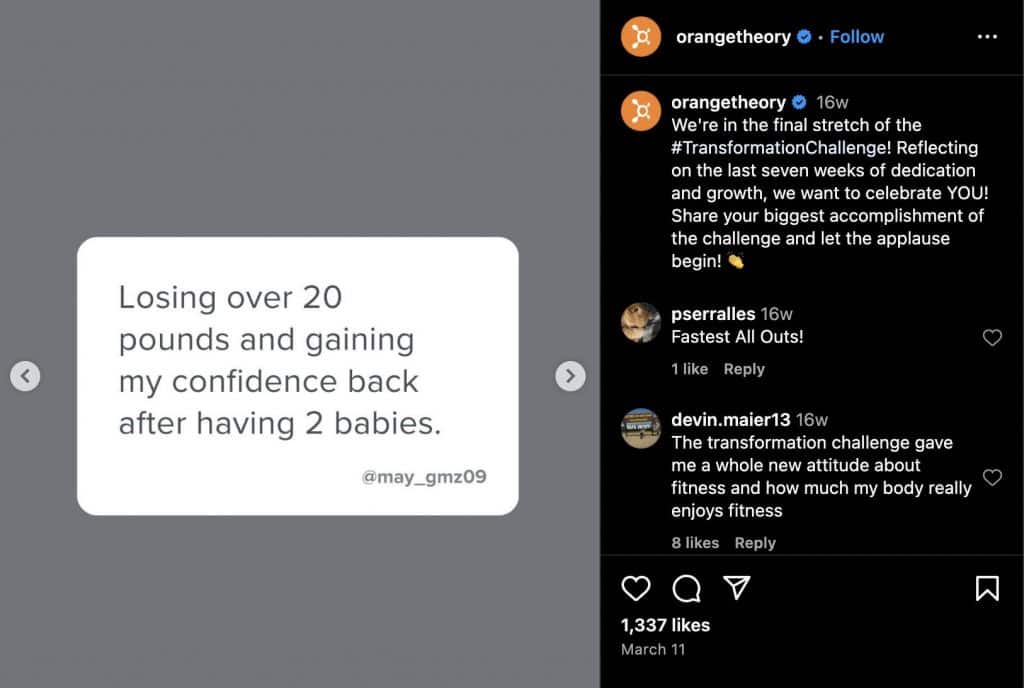
Orange Theory features submissions from their customers in this post! They had a transformation challenge, and asked customers what they are most proud of. By utilizing Instagram’s question feature in their instagram story, fans were able to express how the challenge impacted them.
Additionally, this approach to collect testimonials stands out since their customers not only feel that Orange Theory cares about their opinions, but they also feel special that they got featured in the brand’s social media. By showcasing multiple examples of how the challenge helped them, they are showing that their brand changes lives, which is extremely impactful.
Type: Social media testimonial ad (community-generated testimonials)
Why This Testimonial Ad Works
Features multiple customer voices, increasing social proof
Uses Instagram’s interactive features to collect real testimonials
Highlights personal achievements that potential customers can relate to
Strengthens community engagement around the brand
Shows real results from participating in the program
9. Marriott Bonvoy - Video Testimonial
Marriott Bonvoy also uses the Instagram question feature in their Instagram story to collect testimonials from their customers! Their prompt was “We’re Marriott Bonvoy Members, we…” and their customers finished the sentence.
This is a great way to collect multiple testimonial examples, and putting them in a video ensures that potential customers see what customers love about staying with them. Not only did they have an engaging way of collecting their testimonials, but the video they made with them is eye-catching, making this a great example of using testimonials in your advertisements.
Type: Video testimonial ad (social media compilation)
Why This Testimonial Ad Works
Combines multiple customer testimonials into one engaging video
Uses a simple prompt to encourage authentic customer responses
Highlights real experiences from loyalty program members
Creates a sense of community among travelers
Quickly communicates the benefits of the program through diverse voices
10. Loom - Text Testimonial
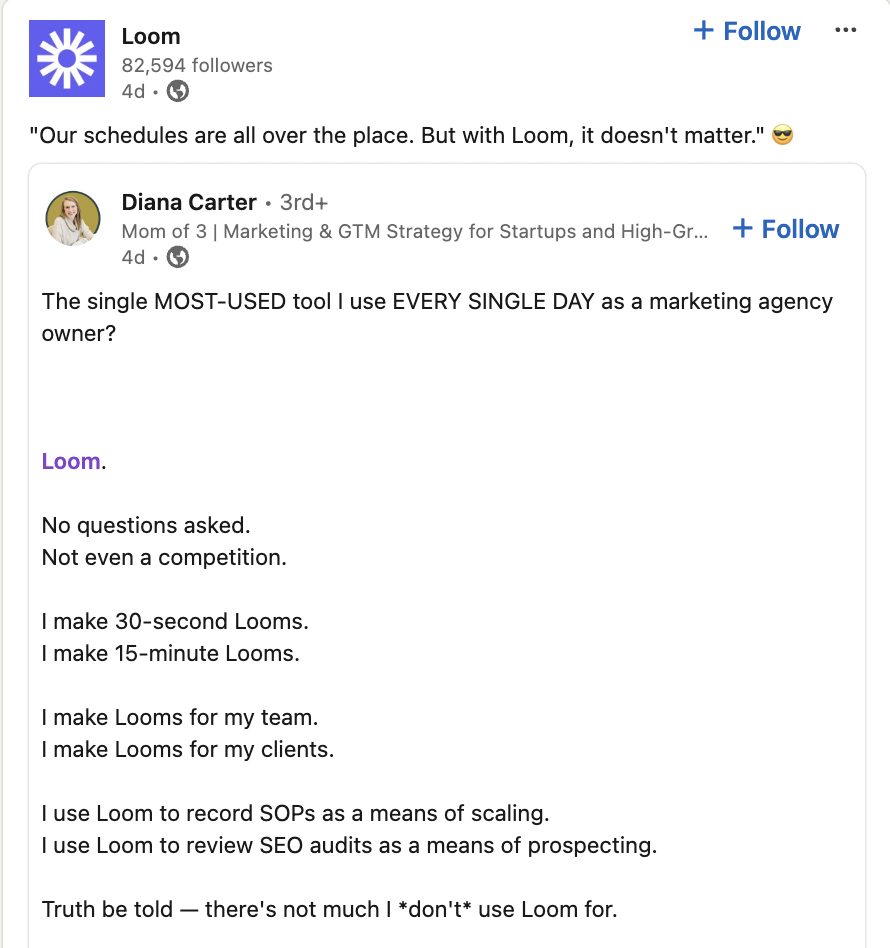
A great way to interact with your clients is to acknowledge the testimonials that they post on their own social media. Loom did this by reposting a LinkedIn post from a customer.
Their customer posted about how they use Loom every day and how it has become a vital tool for their daily tasks. By acknowledging the post, Loom shows that they care about their customers’ experiences.
Additionally, Loom is able to showcase the testimonial on their own LinkedIn page, adding on to the reasons why potential customers should use their software. This is a great example about the impact of testimonials, and how collecting them can create a more positive social image for your brand.
Type: Text testimonial ad (reposted social media review)
Why This Testimonial Ad Works
Uses a real customer post instead of brand-written copy
Preserves the authenticity of the original message
Shows how the product integrates into daily workflows
Demonstrates organic social proof from existing users
Encourages other customers to share their own experiences
11. Glossier- Video Testimonial
Glossier hit the nail when it comes to curating video testimonials. They have produced various video campaigns showcasing customer testimonials. One such example is their “You Look Good” campaign: Glossier created a video ad that features quick clips from multiple customers, each sharing a favorite product and what they love about it. The testimonial snippets were shot by the customers themselves, making the ad feel like an authentic beauty vlog.
This technique works well for eCommerce and beauty brands — the montage style keeps things dynamic and shows a wide range of customer experiences in one video.
Type: Video testimonial ad (multi-customer montage)
Why This Testimonial Ad Works
Combines multiple customer testimonials into one engaging video
Uses quick clips to maintain viewer attention
Feels authentic because the footage resembles user-created content
Highlights different products and customer experiences at once
Mirrors the style of organic beauty vlog content, making the ad more relatable
12. Warby Parker - Carousel Testimonial
Warby Parker features real customer quotes in Instagram carousel ads, often paired with close-up images of the glasses. One slide might say, “These are the most comfortable glasses I’ve ever worn,” while another highlights a specific style or feature.
This allows Warby Parker to showcase both the product and the customer experience — all within a clean, scannable visual.
Type: Social media testimonial ad (Instagram carousel)
Why This Testimonial Ad Works
Combines customer quotes with clear product visuals
Uses a carousel format that encourages interaction and swiping
Highlights multiple benefits across different slides
Keeps the testimonial short and easy to read in a mobile feed
Blends social proof with product discovery in one format
13. Duolingo - Video Testimonials
Duolingo leans into humor and social proof by reposting TikToks where users show their progress or react to the app’s notifications and streak challenges. These testimonial-style videos often go viral because they’re funny and relatable.
Instead of traditional testimonial formats, Duolingo embraces the chaotic charm of UGC and turns reactions into content that entertains and persuades.
Type: UGC-style video testimonial ad (TikTok/social media)
Why This Testimonial Ad Works
Uses authentic user-generated content instead of scripted ads
Leverages humor and relatable experiences to capture attention
Shows real people interacting with the product in everyday situations
Matches the native style of platforms like TikTok
Encourages other users to create and share their own content about the app

💡 Bonus: How to Structure Testimonial Reels for Education & Product Explanations
When creating short-form video ads (Instagram Reels, TikTok, YouTube Shorts) for educational products or software explanations, traditional structures fail. You only have 30–60 seconds. Use this exact 3-Part UGC Framework:
The Hook (0-3s): Start with the ultimate result or a shocking pain point. (e.g., “How I compressed 3 months of data research into 3 days.”)
The Product Explanation (3-20s): Show the screen or the interface in action while the real user explains the specific feature that solved their problem.
The Social Proof CTA (20-30s): End with a genuine, unscripted recommendation and a clear next step.
14. Airbnb – Text Testimonial
With summer break approaching, Airbnb is spotlighting U.S. educators in a heartfelt campaign that shows how hosting can be a way to earn extra income. Many teachers, navigating tight salaries and rising living costs, are turning to Airbnb to supplement their income during the summer and beyond.
In one ad, the platform features real teachers sharing how hosting has helped them make ends meet. By highlighting these personal stories, Airbnb not only humanizes its brand but also builds trust—especially among first-time users who may be hesitant to book or host.
Type: Text testimonial ad (story-driven testimonial)
Why This Testimonial Ad Works
Uses real-life stories that potential hosts can relate to
Highlights a practical benefit rather than abstract marketing claims
Builds emotional connection through personal experiences
Targets a specific audience segment with relevant messaging
Strengthens brand trust by sharing authentic customer perspectives
15. Notion – Text Testimonial
Notion often turns organic social posts into ads. In one example, a tweet from a user reads, “Notion basically runs my life at this point.” Notion transformed that simple tweet into a polished visual with their branding and ran it as a paid social ad.
By using a real quote directly from a fan, Notion not only highlights the product’s value but also keeps the testimonial raw and relatable. This type of UGC-style ad is perfect for brands that want to appear approachable and community-driven.
Type: Text testimonial ad (repurposed social media quote)
Why This Testimonial Ad Works
Uses a real customer quote instead of brand-written messaging
Keeps the testimonial simple and easy to understand
Maintains authenticity by preserving the original user statement
Adapts organic social proof into a format suitable for advertising
Reinforces the brand’s community-driven identity
How to Create Testimonial Ads That Convert
Creating effective testimonial ads requires more than simply sharing a positive customer quote. The most persuasive testimonial campaigns highlight real experiences, communicate clear value, and place social proof where it can influence buying decisions. When done correctly, testimonial advertising can strengthen credibility, reduce buyer hesitation, and improve conversion rates across multiple marketing channels.
Here are several key principles brands use when creating high-performing testimonial ads.
Focus on the Problem–Solution–Outcome Structure
The strongest testimonials follow a clear narrative structure. First, the customer describes the problem they faced. Next, they explain how the product or service helped solve that problem. Finally, they share the outcome or result they experienced.
This structure makes testimonials more persuasive because potential customers can easily relate to the problem and imagine achieving the same outcome.
Use Specific Results Instead of Generic Praise
Testimonials that include measurable results are far more convincing than vague compliments. Statements such as “This product saved our team five hours every week” or “Our conversion rate increased after switching platforms” communicate clear value.
Specific details make testimonials feel more credible and help potential customers understand exactly what benefits they might expect.
Use Video Testimonials When Possible
Video testimonials are often more powerful than written ones because they capture facial expressions, tone of voice, and authentic reactions. These non-verbal cues make the testimonial feel more genuine and trustworthy.
For many brands, short customer videos recorded on smartphones or social media platforms perform better than heavily produced marketing videos because they feel more natural and relatable.
Match Testimonials to the Customer Journey
Testimonials can be effective at multiple stages of the marketing funnel. In social media ads, they attract attention and introduce social proof. On landing pages, they help reinforce product claims. Near pricing sections or call-to-action buttons, testimonials reduce purchase hesitation and help customers feel more confident about making a decision.
Placing testimonials close to key decision points increases their impact.
Combine Testimonials with Visual Context
Testimonials become more persuasive when customers can see the product or service in action. This can include product demonstrations, screenshots, before-and-after results, or lifestyle visuals showing how the product is used.
Visual context helps potential buyers understand how the solution fits into real-world situations.
How to Create Testimonial Advertisements using Vidlo
To collect testimonials, create a Vidlo campaign! With Vidlo, you can collect video testimonials from your customers. You can enter a prompt for customers to answer, upload your logo to be in the video, and select a filter for your customers to use. Then, you send your customers your Vidlo link or QR code, and they are able to record their testimonials.
All their testimonials get synced up to your Vidlo dashboard, so you can access them easily. Your brand can download the videos and post them on your social media, or put them into an advertisement. Plus, your customers can download their video after they create it, or upload it to TikTok!
Using testimonials in your advertising is a great way to create compelling content for potential customers. Testimonials have the ability to convince people why they should choose your brand over competitors.
The content your brand makes with testimonials will enhance your marketing, and will cause you to increase engagement and have a higher ROI. To learn more about how Vidlo can help with your testimonial advertising campaigns, sign up for a demo.
Frequently Asked Questions About Testimonial Advertising
What is testimonial advertising?
Testimonial advertising is a marketing strategy that uses customer experiences, reviews, or success stories to promote a product or service. Instead of relying on brand messaging, testimonial ads highlight the voice of real customers who describe how a product solved a problem or delivered value. This approach increases credibility because potential buyers often trust peer experiences more than traditional advertising claims.
What is the difference between testimonials and endorsements?
Testimonials usually come from real customers who share their personal experiences with a product or service. Endorsements, on the other hand, are often associated with celebrities, influencers, or public figures who promote a brand in exchange for compensation. While both can influence buying decisions, testimonials tend to feel more authentic because they come from everyday users rather than paid promoters.
Are video testimonials more effective than written testimonials?
Video testimonials are often considered more persuasive because they capture facial expressions, tone of voice, and natural reactions. These non-verbal cues help audiences perceive the testimonial as more authentic and trustworthy. However, written testimonials still perform well in contexts where users prefer quick, scannable information, such as landing pages or product comparison sections.
Where should testimonial ads be placed?
Testimonial ads can appear across many marketing channels, including social media campaigns, landing pages, product pages, email marketing, and paid advertisements. They are particularly effective near decision points, such as pricing sections or call-to-action buttons, where potential customers are evaluating whether to complete a purchase.
How long should a testimonial advertisement be?
The ideal length depends on the format and platform. Short testimonials of 20–50 words often work best for display ads, social media posts, and landing page highlights. Video testimonials typically perform well when they are between 20 seconds and two minutes, allowing enough time to explain the customer’s experience while maintaining viewer attention.
What makes a testimonial advertisement credible?
The most credible testimonial ads include specific details about the customer’s problem, the solution they chose, and the results they achieved. Showing the real customer’s name, image, or video also strengthens authenticity. Testimonials that feel natural, balanced, and experience-driven tend to build more trust than overly polished or exaggerated praise.