

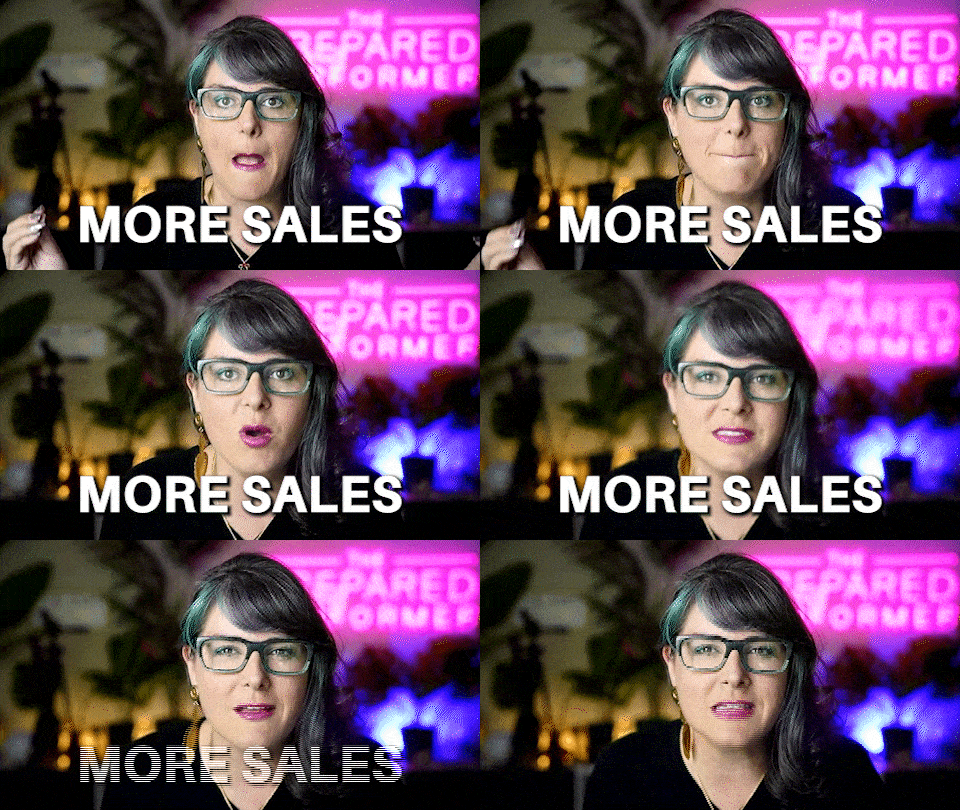
A testimonial is content your customers make with their opinions and thoughts about your brand. The most impactful form of this content is when they are videos! With the rise of Instagram, YouTube, and TikTok, video content has become extremely popular, and even preferred by many. As a result, it has become extremely important to include video content in your digital marketing strategy.
Video testimonials are a great way to get authentic content that truly shows potential customers why they should purchase from your brand. By utilizing them in your marketing strategy, you enable the power of social proof! Social proof is extremely important when it comes to consumer decision making. So, It is essential for your brand to collect video testimonials, and utilize them in your marketing!
Why Video Testimonials Are a Great Way to Boost Sales
Video testimonials allow your brand to build trust since they showcase authentic customer experiences. When your brand creates your own content, it can appear biased. But with testimonials, the content is relatable to your customers, and addresses their wants and needs from their point of view.
Additionally, video testimonials allow your customers to express the emotion that your brand brings them. This is an important aspect since seeing, and hearing, people talk positively about your brand will leave a lasting impression. Video testimonials also allow your customers to showcase your product, or service, benefits in action. This ensures that potential customers will trust that your brand will bring quality offerings to them.
According to The DVI Group, “Research shows that websites featuring video testimonials experience an average conversion rate increase of 80%”. A big aspect that contributes to this is social proof. Social proof is the idea that people are influenced by other people’s actions.
An example is, when you see a friend post about how much fun they had at a museum. You are more likely going to want to plan a trip to the museum so that you can experience it too! Similarly, in marketing, when your peers post about a brand, you will want to check out the same brand. A good or bad review from your peers make or break your purchasing decision. Also, some people will not trust a brand unless their peers have purchased from them before.
Video testimonials can be used in multiple marketing channels, such as:
- On social media (in posts, stories, etc)
- In advertisements
- In email campaigns
- In business proposals
- On your website (check out our blog on this!)
Thus, utilizing video testimonials across your marketing strategy ensures that potential customers are more likely to purchase from your brand, and will boost sales as a result.
Key Elements of High-Converting Video Testimonials
Just having testimonials isn’t enough, you need to think about what you want in the content of the testimonials your customers create. Here are some key elements of high converting video testimonials:
- Authenticity: It is extremely important for the content in your video testimonials to be authentic. Advise your customers to speak from their heart, and to express how they truly feel about your brand.
- Natural Delivery: Make sure your customers appear comfortable on camera. Provide them with tips to ensure they are comfortable and not too formal. For example, you can tell them to pretend they are talking to a friend. By doing this, they will express how they feel without a filter.
- Clear Messaging: When you ask your customers to record a testimonial for you, be sure to instruct them on what to talk about. This ensures that their message is clear and to the point. Creating effective UGC hooks in your video testimonials can significantly increase engagement and conversion rates.
- Quality: Make sure the videos you collect are good quality, and the audio is clear. You can instruct customers to record their video on their phone to get the best quality.
- Specific Details and Results: Make sure your customers are specific about their review. For example, saying “this product is good” is not as impactful as “this product provided me with , and I really enjoyed it”.
- Diverse Representation: Since your customers are diverse, it is important to accurately represent all of them. Be sure to showcase a range of customer demographics and use cases so that each video is impactful.
- Length and Pacing: Tell your customers how long their video should be, and remind them to talk at a natural pace.
- Call-to-Action: Your brand can add an outro to the testimonials collected. You can tell viewers to check out your website, comment their favorite part about the product or service shown, or comment any questions they have.
How to Use Video Testimonials for Sales (Not Just Social Media)
Most brands treat video testimonials as awareness content — something to post on Instagram or repurpose for ads. But the real revenue impact happens when testimonial videos are embedded directly inside your sales journey. When placed at the right friction points, they reduce doubt exactly when buyers are about to make a decision.
Here’s how to use video testimonials for sales in a way that directly increases conversions:
- Place them directly under the hero section on your sales page :
The first question visitors subconsciously ask is, “Can I trust this?” A short, high-impact testimonial video positioned immediately below your main headline acts as instant validation. Instead of scrolling through product claims, visitors see a real customer reinforcing your value proposition. This alignment between promise (headline) and proof (testimonial) reduces bounce rates and strengthens early-stage trust formation — which is critical for high-converting testimonial videos. - Embed them strategically on your pricing page.
Pricing pages trigger hesitation. This is where objections peak. Adding testimonial videos next to pricing tiers — especially clips that mention ROI, cost savings, or measurable results — reframes the price from “expense” to “investment.” For example, a customer explaining how your solution increased revenue or saved hours per week directly supports the purchase decision. This approach is one of the most overlooked ways to increase sales with testimonial videos. - Integrate them into proposals and sales decks.
In B2B sales, credibility accelerates deals. Instead of attaching written case studies, embed short testimonial clips inside your proposal PDF (via clickable thumbnails) or sales presentation. A 45-second video of a client explaining results is more persuasive than three pages of text. It shifts the dynamic from “us claiming” to “customers confirming.” This is especially powerful in testimonial video campaigns targeting high-ticket services.
- Use them in the B2B SaaS demo process.
After a live demo, prospects often say, “This looks good, but will it work for us?” Sending a follow-up email that includes a testimonial video from a similar company answers that question before it becomes an objection. During demos, you can also pause and play a 20-second clip that validates a specific feature being discussed. This creates contextual proof — social proof delivered at the exact moment of evaluation.
- Add them before checkout to reduce last-minute friction.
Cart abandonment frequently happens because of uncertainty, not price alone. Embedding a short testimonial video near the checkout button — especially one that addresses common concerns (shipping time, quality, support, ease of use) — reassures buyers at the final decision stage. Seeing someone else confidently describe their positive experience acts as psychological safety reinforcement.
- Use segmented testimonials based on buyer intent.
Not all visitors are the same. New visitors may need emotional reassurance, while returning visitors may need ROI validation. Structuring your testimonial videos by use case, industry, or problem type allows you to match proof to intent. This improves relevance, which is a key driver behind high-converting testimonial videos.
When used intentionally across the sales funnel — not just on social media — video testimonials become conversion assets rather than branding content. They function as embedded trust triggers at high-friction moments. And when trust increases at decision points, sales naturally follow.
Video Testimonials Targeting Techniques for Digital Ads
Collecting high-converting testimonial videos is only half the battle; knowing how to target the right audience with these assets is what maximizes ROI. Because video testimonials carry heavy social proof, they perform completely differently depending on where a prospect is in your advertising funnel.
To lower cost-per-acquisition (CPA), implement these three precise targeting techniques in your paid campaigns:
The Bottom-of-Funnel (BOF) Retargeting Surge: Target users who visited your pricing page or abandoned their cart within the last 14–30 days. Serve them specific testimonial videos that directly counteract friction points (e.g., a customer talking about how easy the onboarding was, or how the product paid for itself in month one).
High-Intent Lookalike (LAL) Seed Audiences: Take your highest-converting video testimonial viewers (those who watched 75% or more of the video organically or via ads) and build a 1% Lookalike Audience. This signals to ad platform algorithms that you want to attract users who exhibit the same behavioral intent and emotional engagement as your best buyers.
Cross-Platform Intent Matching (B2B): In B2B SaaS marketing, target prospective buyers on LinkedIn using professional filters (Job Title, Seniority, Company Size) and serve them video testimonials from recognizable industry peers. Pair this with Google Search ads where the user is looking for alternatives to your competitors, sending them to a dedicated landing page built around user proof.
What Makes High-Converting Testimonial Videos for Marketing?
Not all testimonial videos drive revenue. Some generate views. The ones that convert follow specific psychological and structural principles. If your goal is marketing performance — not just brand awareness — these elements matter most:
- Before/After Framing : High-converting testimonial videos clearly show transformation. The customer should describe their situation before using your product and contrast it with measurable improvement after. This structure creates cognitive contrast, which makes results feel tangible rather than abstract.
- Problem-First Storytelling : Strong testimonial marketing doesn’t start with praise — it starts with friction. When a customer explains the frustration, confusion, or obstacle they were facing, it mirrors the internal dialogue of your prospects. That alignment increases relevance and keeps viewers engaged longer.
- Specific Metrics and Tangible Outcomes : Statements like “it helped a lot” don’t convert. Specific numbers do. Revenue growth percentages, time saved per week, cost reductions, productivity gains — these create credibility. Even approximate metrics (“cut onboarding time in half”) outperform vague enthusiasm.
- Emotional Micro-Moments : Subtle facial expressions, pauses, laughter, visible relief — these small human moments build trust faster than polished scripts. Marketing-driven testimonial videos shouldn’t feel overly rehearsed. Authentic emotional cues reduce perceived manipulation and increase believability.
- Clear but Subtle CTA Placement : The testimonial itself shouldn’t feel like an ad. However, the placement of the video should guide action. Whether it sits under a pricing section, beside a demo request button, or near checkout, the surrounding CTA should be contextually aligned with the story being told.
High-converting testimonial videos for marketing aren’t longer — they’re sharper. They connect problem to proof, proof to outcome, and outcome to action. And when those elements align, conversions follow.
Winning Video Testimonial Examples for Marketing
Real-world examples show how video testimonials move beyond brand awareness and actively drive revenue. Below, you’ll find winning video testimonial examples for marketing and sales — each demonstrating how authentic customer stories can reduce friction, reinforce value, and increase conversions at critical decision points.
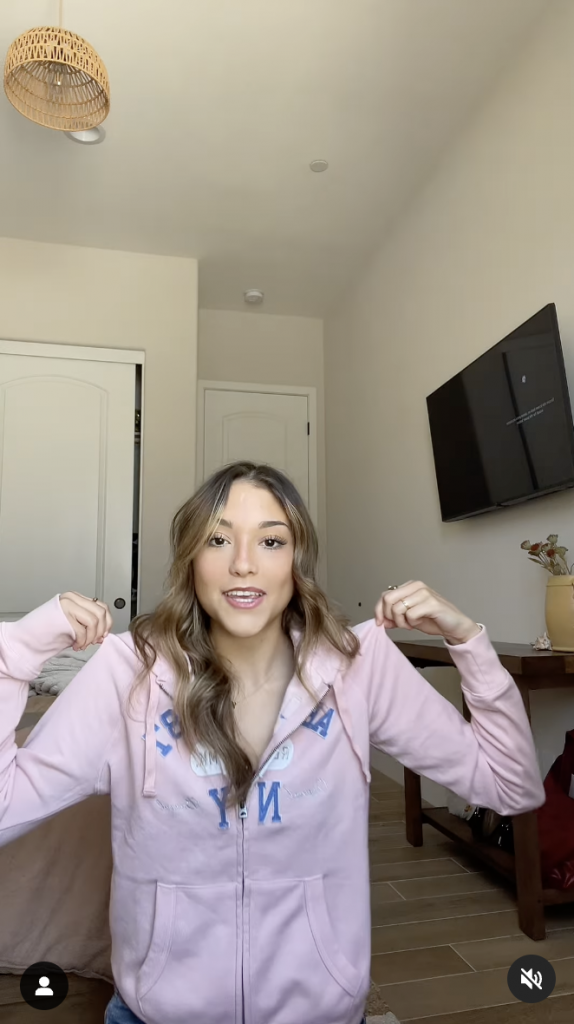
1. Aeropostale
Many people like to see how clothes look on actual customers in video form, which is exactly what this video testimonial on Aeropostale’s Instagram provides. At the beginning, she also mentions they can find their clothes on Amazon, giving the viewer a clear CTA. This video testimonial is impactful since it accurately shows what their products are like in a good quality video, ensuring that potential customers will check out their clothing.
Why This Works for Marketing & Sales
- Demonstrates real-world product fit by showing how the clothing looks on an actual customer rather than a studio model. This reduces purchase hesitation, especially in fashion where fit and appearance drive decisions.
- Combines social proof with clear distribution access (mentioning Amazon), which shortens the path from discovery to purchase. That subtle CTA integration strengthens conversion potential.
- Feels native to the platform (Instagram), which increases authenticity and lowers ad resistance. Viewers perceive it as relatable content rather than promotional messaging.
- Visually showcases styling versatility, helping prospects imagine themselves wearing the product — a key psychological trigger in apparel marketing.
- Bridges awareness and transactional intent by pairing emotional relatability with immediate buying clarity, making it effective for both marketing campaigns and sales-driven landing pages.
2. Glossier
Glossier shares videos of their customers using their products on their social media. In this video, the customer shows how she uses their products, and states it is her perfect summer lip look. This testimonial is impactful since it clearly shows how the product can be used to achieve a look that customers want. i
Why This Works for Marketing & Sales
- Shows the product in real-time use rather than static promotion, which increases credibility and reduces skepticism. Seeing application technique builds practical trust, not just emotional appeal.
- Aligns with seasonal intent (“perfect summer lip look”), making the testimonial contextually relevant and timely — a strong marketing performance driver.
- Demonstrates outcome visually, allowing viewers to immediately evaluate the result instead of imagining it. This reduces cognitive effort and shortens the decision cycle.
- Feels organic and creator-led, which lowers perceived advertising bias and strengthens authenticity signals — critical for high-converting testimonial videos in beauty marketing.
- Bridges inspiration and purchase intent by showing both the transformation and the ease of use, making it effective for product pages, ads, and retargeting campaigns.

3. Fenty Hair
Fenty Hair features videos of their customers with all different hair types, showing potential customers how their products can work for them. In this video testimonial, the customer shows how she uses Fenty Hair products, and explained how it helped her hair. This is a great example of how testimonials can be impactful, since people with similar hair types can see how it would work for them!
Why This Works for Marketing & Sales
- Highlights diverse hair types and textures, which expands relatability and reduces the “will this work for me?” objection. Inclusive representation directly increases conversion potential across broader audience segments.
- Demonstrates product performance on real hair in natural conditions, making the results feel achievable rather than studio-enhanced. This strengthens authenticity — a key driver in beauty marketing.
- Connects problem to visible outcome, allowing viewers to see texture improvement, definition, or shine in action. Visual proof reduces hesitation more effectively than descriptive claims.
- Builds trust through experiential storytelling, where the customer explains how the product helped her specifically. That personalization increases perceived credibility.
- Functions as scalable social proof for both awareness campaigns and high-intent environments like product pages or retargeting ads, where reassurance is critical before purchase.

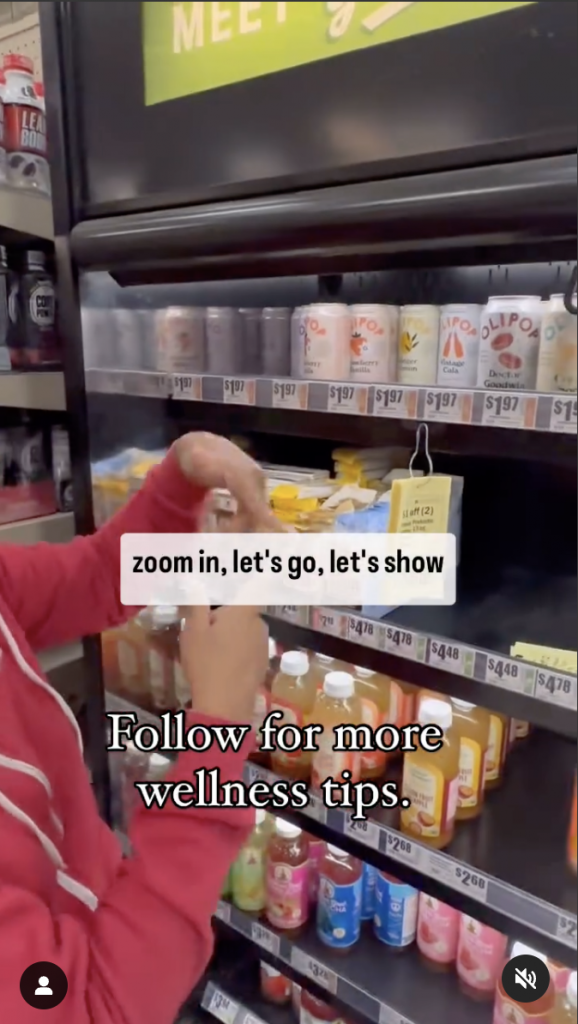
4. Olipop
Olipop’s customer posted this video made by their customer, which is a great example of how video testimonials are the key to connecting with potential customers. This customer explained the benefits of Olipop and explained how it solves a problem for her.
Why This Works for Marketing & Sales
- Centers on a clear problem-solution narrative, explaining not just what the product is, but why it matters in the customer’s daily life. This framing increases persuasive impact in health and lifestyle marketing.
- Communicates functional benefits in relatable language rather than brand terminology, making the value feel accessible and trustworthy. When customers articulate benefits themselves, credibility increases.
- Addresses health-conscious objections indirectly by highlighting personal experience, which reduces skepticism without feeling defensive or promotional.
- Feels conversational and unscripted, reinforcing authenticity — a critical trust factor in better-for-you consumer brands.
- Translates well across marketing channels, from paid social ads to landing pages, because it balances emotional relatability with practical benefit clarity — a combination that supports both awareness and sales conversion.
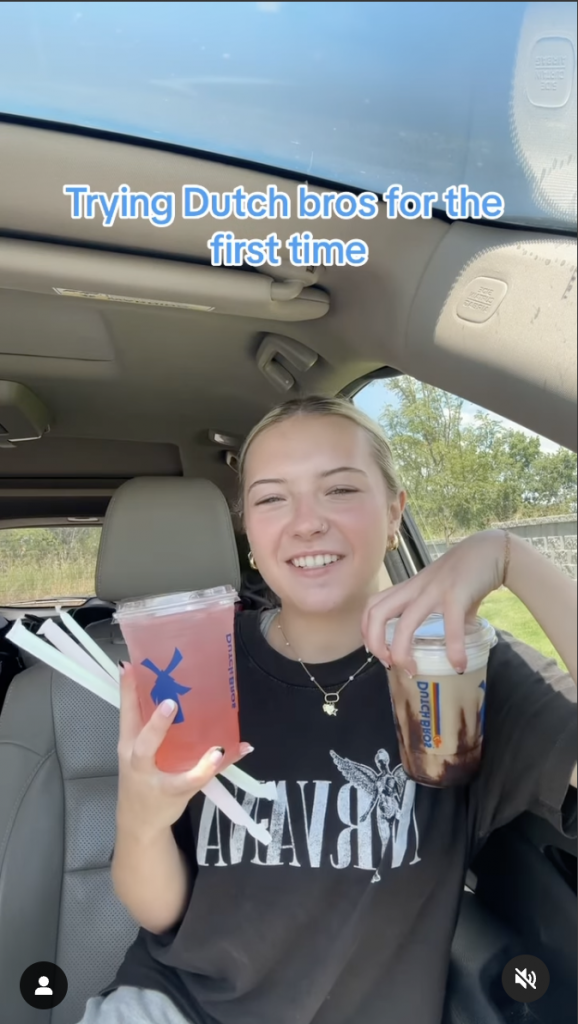
5. Dutch Bros Coffee
Dutch Bros Coffee’s customer posted this video showing how authentic testimonials are! The customers in the video state which drinks they got and showed their reactions to each drink. This is a great example of how emotion is expressed better through videos.
Why This Works for Marketing & Sales
- Captures genuine first reactions, which are powerful trust accelerators in food and beverage marketing. Real-time emotional responses feel far more persuasive than scripted endorsements.
- Showcases multiple products in a single video, increasing exposure to variety while maintaining authenticity. This subtly supports upselling and cross-selling potential.
- Leverages social dynamics — friends sharing reactions — which amplifies relatability and strengthens social proof. Viewers are more likely to imagine themselves in the same experience.
- Reduces perceived risk by showing immediate enjoyment and satisfaction, which is especially important for impulse-driven purchases.
- Functions effectively in paid social and retargeting campaigns because it combines entertainment with validation, bridging awareness and transactional intent.
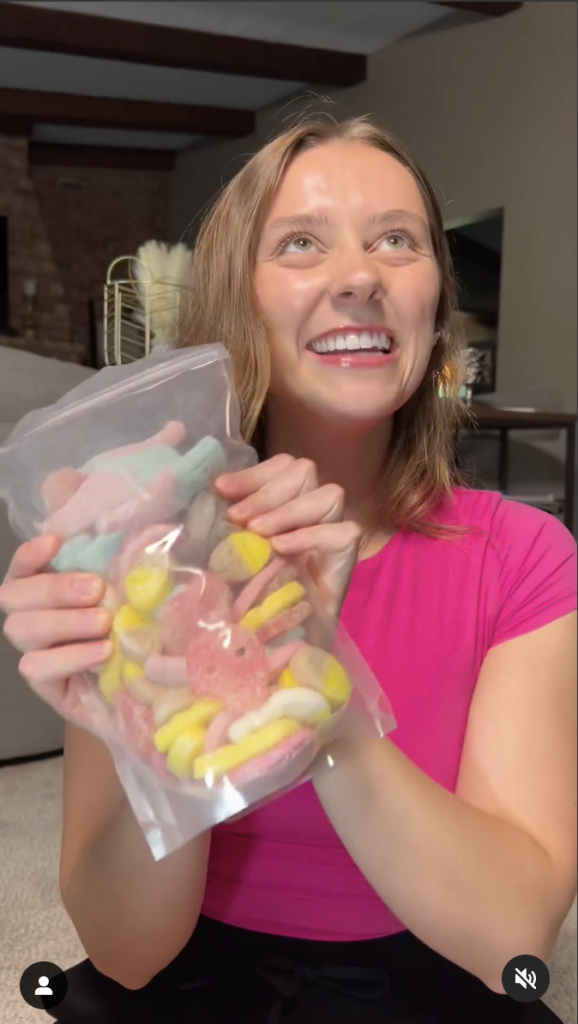
6. Sweetish Candy - A Swedish Candy Store
One of Sweetish Candy’s customers made a video trying their candies! They reposted it, so that their customers are able to see the review of their products. This video testimonial is a good example of how your customers’ real reactions to your offerings can make your brand stand out.
Why This Works for Marketing & Sales
- Showcases authentic product reactions in real time, which increases perceived honesty and reduces promotional bias. Viewers trust spontaneous taste reactions more than polished advertising.
- Turns the product into an experience rather than just a purchase, strengthening emotional association with the brand. Experience-driven testimonials often increase repeat purchase intent.
- Demonstrates variety visually, allowing potential customers to see textures, colors, and packaging — reducing uncertainty before buying.
- Feels native to short-form platforms like TikTok, which improves engagement and makes the testimonial suitable for paid social amplification.
- Converts curiosity into action by letting viewers imagine trying the candy themselves — a subtle but powerful psychological trigger in food marketing.
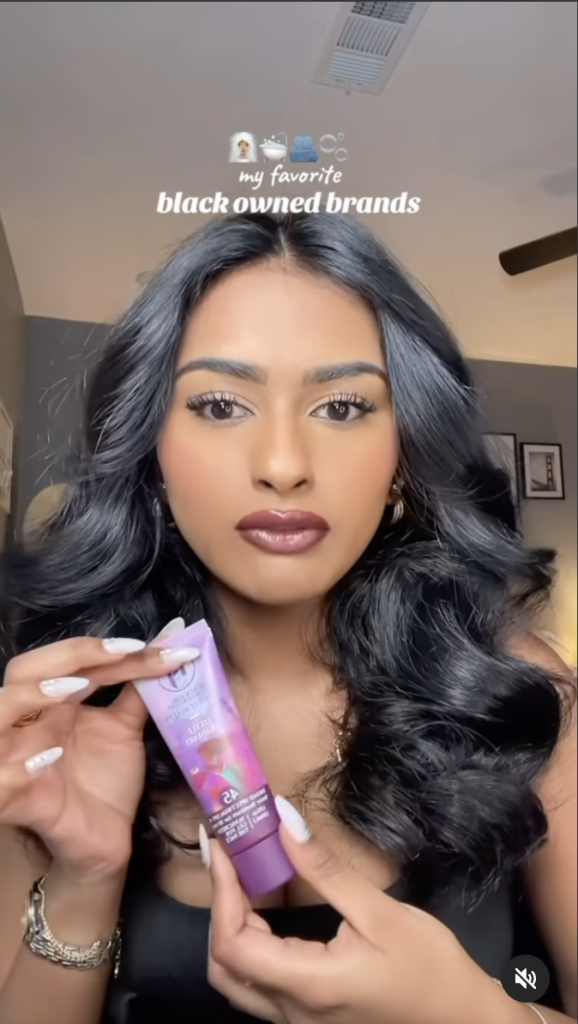
7. Black Girl Sunscreen
In this video testimonial that Black Girl Sunscreen shared on their social media, their customer expresses why she loves their product. She explains the benefits of the product, and addresses pain points that potential customers may have. This is an example of how an authentic and easy going video can end up boosting sales for your brand.
Why This Works for Marketing & Sales
- Directly addresses a specific customer pain point, making the testimonial highly relevant to its target audience. When viewers feel seen and understood, trust increases significantly.
- Reinforces brand positioning by highlighting why the product is uniquely suited for a particular demographic. This clarity strengthens differentiation in competitive markets.
- Combines benefit explanation with personal experience, which increases credibility more than brand-led claims. The testimonial feels educational without sounding promotional.
- Reduces skepticism around product effectiveness by allowing a real customer to explain the outcome in her own words. This lowers hesitation in high-consideration beauty purchases.
- Works especially well on product and landing pages where buyers are actively evaluating suitability, making it a strong asset for marketing-driven conversions.
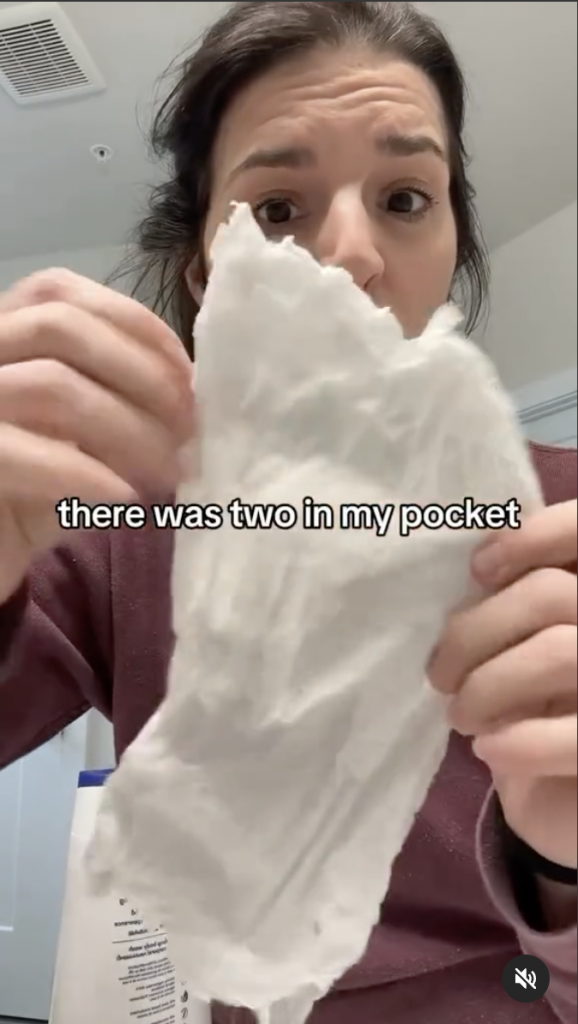
8. Bounty
Bounty shares a video from their customer showing how strong their paper towels are! The customer shows how they had 2 paper towels go in their wash, and they lasted the entire wash cycle. This is an example of how videos explain concepts better than text does. Reading that Bounty paper towels last a wash cycle has a different impact than seeing it. So, this video testimonial shows potential customers that Bounty is extremely strong.
Why This Works for Marketing & Sales
- Demonstrates product strength visually rather than describing it, which makes the claim immediately believable. Seeing the paper towels survive a wash cycle removes doubt more effectively than written copy ever could.
- Turns a simple functional benefit into compelling proof by showing real-world performance under stress. This strengthens credibility in everyday household purchases.
- Reduces purchase risk by proving durability in a relatable scenario, which is especially important in low-consideration but repeat-buy categories.
- Makes the product’s competitive advantage obvious without direct comparison, allowing viewers to draw their own conclusions. Subtle proof often converts better than aggressive positioning.
- Works effectively in product pages and paid ads because it pairs demonstration with validation — a powerful combination for driving confident buying decisions.
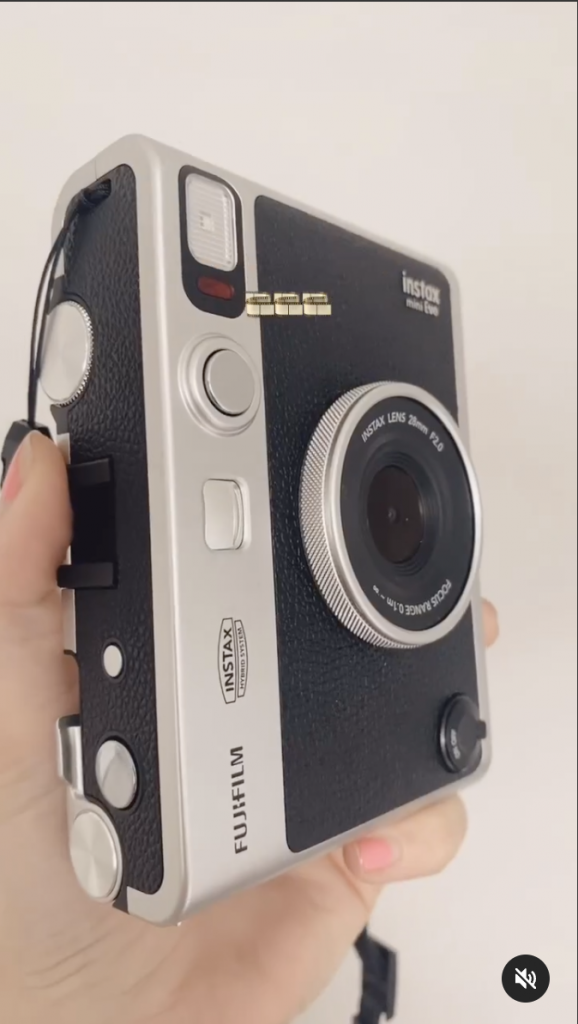
9. Instax
An Instax customer shares this impactful video testimonial! She explains the features she enjoys about the camera, and shows them in action. This testimonial stands out since it is short and sweet, but also shows how many different features the camera has. The quality of the video also helps to convince potential customers that they should look into this camera.
Why This Works for Marketing & Sales
- Clearly demonstrates product features in action, reducing uncertainty about usability and functionality. Viewers don’t have to imagine how it works — they see it instantly.
- Balances feature explanation with lifestyle appeal, positioning the camera as part of meaningful moments rather than just a device. This emotional framing strengthens purchase motivation.
- Keeps the message concise while still showcasing multiple benefits, which improves retention and engagement in fast-scrolling environments.
- Builds credibility through personal enthusiasm and natural delivery, reinforcing authenticity signals important for high-converting testimonial videos.
- Translates well to product pages and retargeting ads because it combines proof of capability with emotional desirability — a strong driver in consumer electronics marketing.
10. Jellycat
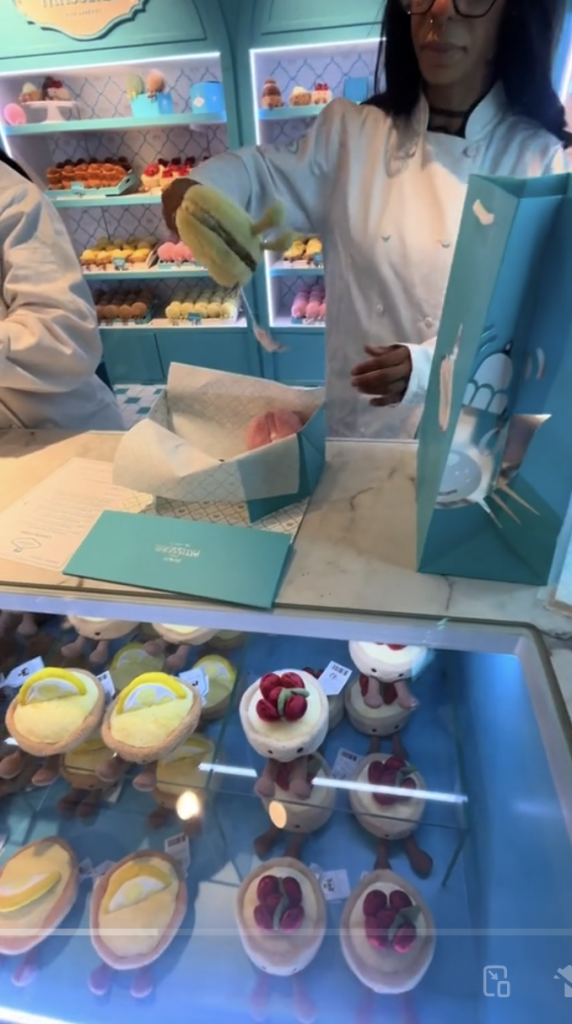
One of Jellycat’s customers made a TikTok of their experience inside the Jellycat Patisserie! This video shows their experience, and the excitement in her voice shows exactly why video testimonials leave an impact on potential customers. The video was also taken at a natural pace, making it easy for people to relate to the video, and want to experience it themselves.
Why This Works for Marketing & Sales
- Captures genuine excitement inside a branded physical environment, turning the store visit into an immersive brand experience rather than a simple purchase. Experience-driven testimonials often increase brand memorability and emotional attachment.
- Amplifies emotional tone through voice and pacing, which strengthens authenticity and makes the enthusiasm feel contagious. Emotional energy is highly persuasive in lifestyle and gift-oriented products.
- Showcases the environment, product displays, and atmosphere — subtly reinforcing brand identity while remaining customer-led. This blends social proof with experiential marketing.
- Encourages aspirational behavior by allowing viewers to imagine themselves in the same joyful setting, which can drive both foot traffic and online purchases.
- Works effectively across organic and paid social campaigns because it feels spontaneous and platform-native, reducing ad resistance while still supporting conversion intent.
11. Slack (B2B SaaS Campaign)
Slack doesn’t just show people using their chat application; they build entire narrative-driven testimonial video campaigns around how global teams transformed their internal culture. In their famous “So Yeah, We Tried Slack” campaign, they highlighted a real company (Sandwich Video) that was highly skeptical before implementing the tool.
Why This Works for Marketing & Sales:
Problem-First Framing: It explicitly begins with the chaos of email chains, mimicking the exact pain points of target prospects.
Measurable Outcomes: The characters mention real-world productivity gains, such as a massive drop in internal emails, which converts logical B2B buyers.
High Production Contrast: While maintaining a natural and highly relatable conversational delivery, the clean storytelling functions perfectly as a high-ticket sales asset.
12. HubSpot (Mid-Market B2B Sales Setup)
HubSpot frequently embeds case-study driven testimonial videos directly on their product features pages. Instead of a generic “we love HubSpot” quote, these videos focus entirely on how a specific marketing director scaled their lead generation by 300%.
Why This Works for Marketing & Sales:
Job-Role Alignment: A marketing director watching the video instantly identifies with the speaker’s daily challenges and responsibilities.
Contextual Call-to-Action: The video sits right next to a “Request a Demo” button, serving as the final trust validation needed to convert traffic into an active sales pipeline.
Best Practices for Creating Effective Video Testimonials
In order for your customers to create effective video testimonials, your brand needs to properly instruct them.
First, provide your customers with specific questions to answer in their testimonial videos. This will help them think of what to say in their video.
Additionally, it will help your brand have a specific message in your marketing.
Some examples are:
- How did (product/service) help you solve a problem?
- What is your favorite feature of (product/service)?
- What is your favorite thing about our brand?
- Why did you purchase from our brand?
- How has your experience been with our brand?
Additionally, be sure to give them good video taking tips. Tell them to be in a well lit and quiet area. Also, have them make sure their camera is set up in an appealing way. This can be done using a tripod, or by resting their phone against another object. It is also crucial to include if the video should be portrait or landscape so that your company’s content is formatted consistently.
After you receive their testimonial, you should edit their video to fit your branding. This can be done by adding an intro or outro with your logo. It is also important to edit out any unnecessary information. For example, if the person says “Hi my name is ” that is not necessary to include on your social media. You can edit that out and get straight to the meat of their video. It is also important to remember that most people’s attention spans are very short. So, it is good to edit out anything that is a filler, and get straight to the point.
Finally, an extremely important step in asking your customers to create a video testimonial is to get their permission to use their videos in your marketing. Your brand should have a terms of service, or have a disclaimer saying that you have rights to use their video. This way, your brand can avoid legal issues, and you are respecting your customers. If you do not receive permission from your customers, then do not use their videos in your marketing.
How to Optimize for Testimonial SEO to Capture High-Intent Traffic
Most companies optimize their websites for keywords like “best project management software” or “affordable digital agency.” However, they completely ignore bottom-of-the-funnel search terms where buyers are explicitly looking for validation: “[Brand Name] reviews” or “[Brand Name] video testimonials.”
Implementing a strict Testimonial SEO strategy ensures that when prospects search for your credibility, your own highly controlled, positive video assets rank on page one of Google, instead of third-party forum complaints.
Deploy FAQPage & VideoObject Schema Markup: Google cannot watch your video testimonials natively. You must translate the video metadata using JSON-LD schema. Adding VideoObject schema tells Google the exact title, description, thumbnail URL, and upload date of the customer review, allowing it to display rich video snippets in SERP.
Transcribe the Video for Semantic Depth: Always include a full or summarized text transcription beneath your embedded testimonial videos. This injects natural long-tail keywords into your page content, allowing search engines to index the specific results, metrics, and problem statements mentioned verbally by your client.
Build Dedicated Review Landing Pages: Create a cleanly structured
/reviewsor/testimonialsdirectory. Optimize the meta tags of this page specifically for branded search queries. When a prospect searches your company’s name plus “reviews,” this page will act as a structural shield, ensuring they land on a conversion-optimized page backed by video evidence.
The Impact of Video Testimonials
FAQs About Video Testimonials for Marketing & Sales
How do video testimonials increase sales in marketing campaigns?
Video testimonials increase sales by reducing uncertainty at key decision points. In marketing campaigns, they function as embedded social proof — reinforcing claims made in ads, landing pages, and emails with real customer validation. Seeing and hearing authentic experiences activates trust faster than written persuasion alone. When prospects identify with the speaker’s problem and outcome, resistance lowers and purchase intent increases. In short, testimonial videos turn marketing promises into believable proof.
Where should I place testimonial videos for marketing impact on my website?
For marketing performance, placement matters as much as content. Testimonial videos work best directly under the hero section, near pricing tiers, alongside demo request buttons, and before checkout. Each of these areas represents a friction point where doubt can interrupt conversion. Positioning testimonial videos at these moments reinforces credibility when buyers are evaluating risk. Strategic placement transforms testimonials from passive content into active conversion drivers.
What makes a testimonial video high-converting for marketing?
High-converting testimonial videos for marketing follow a clear narrative arc: problem, solution, measurable outcome. They include specific metrics, authentic emotional cues, and relatable scenarios that mirror the viewer’s concerns. The delivery should feel natural rather than scripted, maintaining credibility. Strong testimonial marketing also aligns the video’s message with a nearby call-to-action, guiding viewers toward the next step. Structure and context — not length — determine performance.
Are video testimonials better than written reviews for marketing?
Video testimonials and written reviews serve different roles, but for marketing campaigns focused on conversion, video often has stronger persuasive impact. Visual and vocal cues increase perceived authenticity and emotional resonance. Prospects can evaluate tone, confidence, and sincerity in ways that text alone cannot convey. While written reviews support SEO and credibility, video testimonials create deeper trust signals in high-intent marketing environments. The most effective strategy often combines both formats.
How long should a testimonial video be for marketing performance?
For marketing purposes, testimonial videos typically perform best between 30 and 90 seconds. This length is long enough to establish context and results, but short enough to maintain attention. In high-intent environments like pricing or checkout pages, even 20–45 second clips can be effective. The key is clarity and specificity rather than duration. A concise, focused testimonial that highlights transformation and outcome will outperform a longer but unfocused one.