


Testimonials are statements from your customers, including their opinion of your brand, your products, or your services. Testimonials can be in the form of text, images, audio, or videos! They are a great form of content to feature on your website.
Why Testimonials are Important for Your Website
When customers are trying to decide whether they can trust your brand, or if they should go with a competitor instead, testimonials can make or break their decision. By showcasing testimonials on your website, potential customers can look at reviews of your brand at their point of purchase. Even better, your brand can have a testimonial landing page dedicated to showing off all your testimonials. This is also known as a Wall of Love! Many businesses are now leveraging advanced video testimonial tools to dynamically display and organize customer feedback for maximum impact on these landing pages, creating a more engaging and persuasive user experience
Let’s take a look at some website testimonial page examples!
Customer Testimonial Page Examples
Before diving into specific customer testimonial page examples, it’s important to understand why these pages matter from a broader marketing perspective. Testimonial pages are not just collections of positive reviews — they function as strategic social proof assets within your overall conversion rate optimization and landing page design strategy.
When structured intentionally, they reinforce credibility, reduce buyer hesitation, and strengthen trust signals at critical moments in the customer journey. The examples below don’t just showcase good design — they demonstrate how brands integrate customer validation into their growth strategy, transforming testimonials into conversion-driving trust infrastructure.
Chili Piper
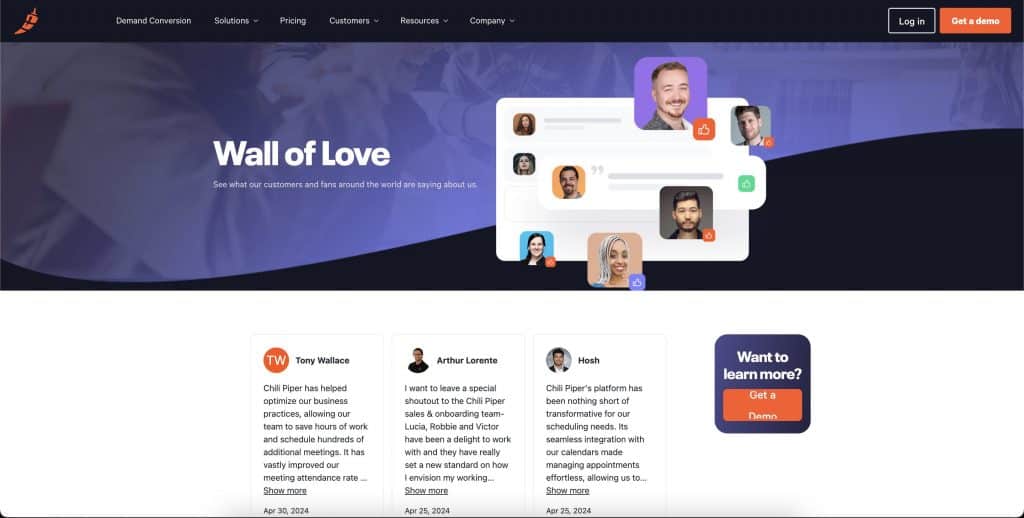
Chili Piper has a wall of love page that displays all their text testimonials! They feature testimonials posted on multiple sites, showing how many customers are satisfied with their brand. This testimonial page allows potential customers to read about customers’ experiences, and decide whether or not they want to use their product.
The way the testimonials are displayed make them easy to read, and makes you feel that you are scrolling on a social media site to view the reviews. This is a creative way to display the testimonials, and the formatting ensures that each testimonial grabs your attention.
Warmly
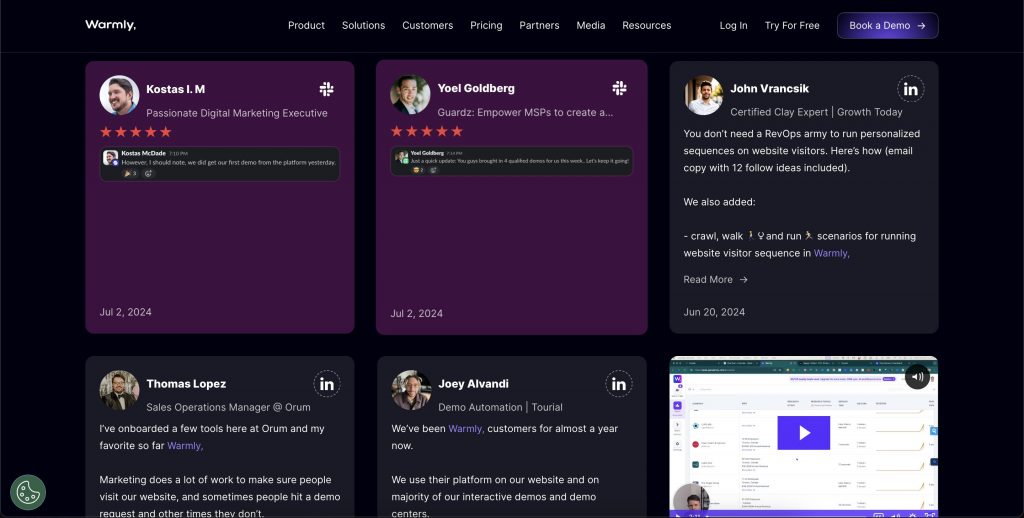
Warmly showcases a wall of love on their website, where there is a star rating at the top. As you scroll on their website, the testimonials appear, creating an engaging animation. Rather than looking at all the testimonials at once, they show 3 at a time, allowing you to read and process each testimonial at your own pace.
Warmly features text, images, and videos, allowing you to focus on the content type that you prefer. The video testimonials are a great way for your customers to express their emotions about your brand, as seen in the videos on their testimonial page.
When designing your testimonial page, it’s crucial to consider how you’ll capture and showcase authentic customer experiences. Many successful brands are now incorporating video testimonials examples into their walls of love. These dynamic testimonials offer a more personal and engaging way to convey customer satisfaction. They allow potential clients to see and hear real people sharing their experiences, which can be significantly more impactful than text alone
Klaviyo
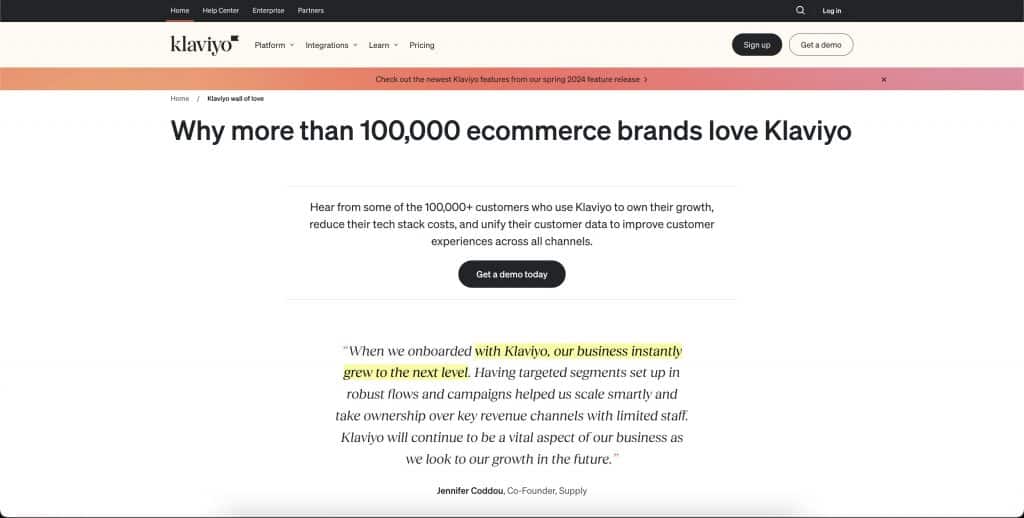
Klaviyo has a combination of video and text testimonials showcased in their wall of love! They state at the top that they have over 100,000 customers, and they chose a few to highlight. By mentioning the number of customers, and showing very strong and positive testimonials, it instills confidence in potential customers. They also highlight important parts of the testimonials in different colors, which ensures that viewers focus on the important parts.
Baremetrics
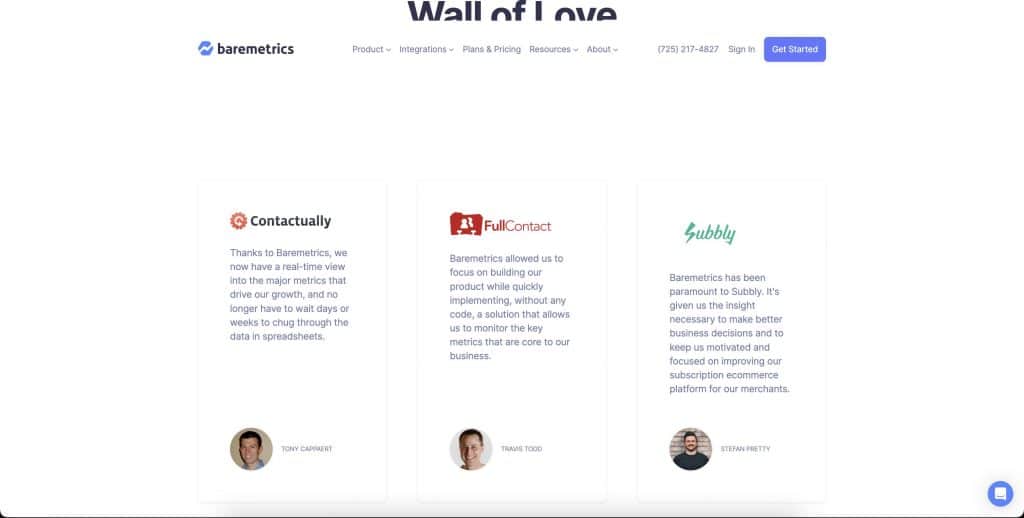
Baremetrics has a wall of love full of text testimonials their customers gave them. This format makes it easy to read all the testimonials. Additionally, since the testimonials are not too long, you are able to quickly learn why their customers love them.
A great feature they include is a picture of the person who provided the quote. This ensures that the testimonials feel more personal, and you can connect more to what is being said.
SmartSuite
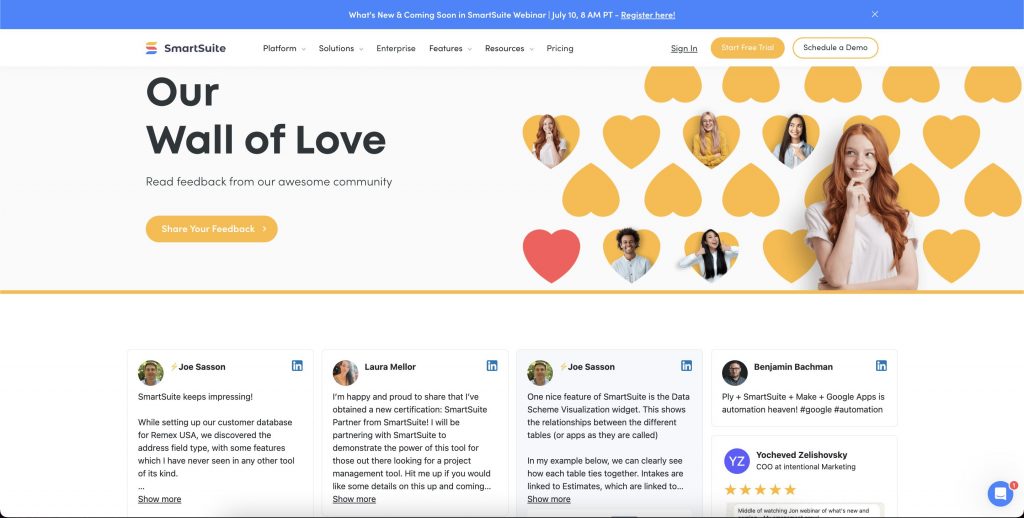
SmartSuite’s wall of love features a fun picture at the top, as well as a link for customers to share their feedback. This shows that they care about their customers’ opinions, and are open to learning more about their experiences.
They feature images, text, and video testimonials, displaying a variety of content from many brands. The layout is easy to scroll through, and ensures that potential customers can learn more about the quality of their platform.
MailerLite
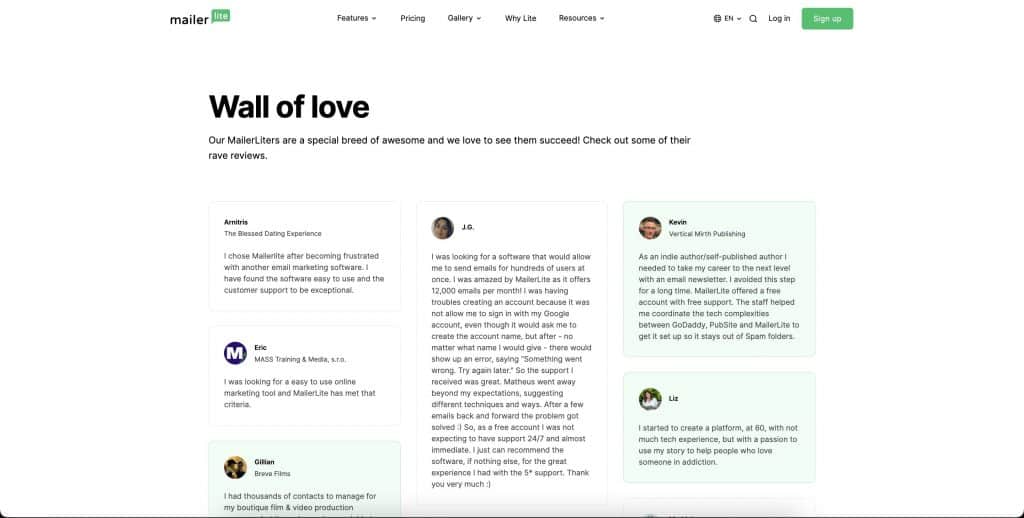
MailerLite’s wall of love shows how you can personalize your wall of love to your branding. They have testimonials that are white and green, matching their color scheme perfectly! Although they only feature text testimonials, the color changes keep you engaged and makes you want to read more.
MailerLite also includes bold quotes at the top of some of the testimonials, ensuring that your attention is drawn to the important quotes.
Eight Sleep
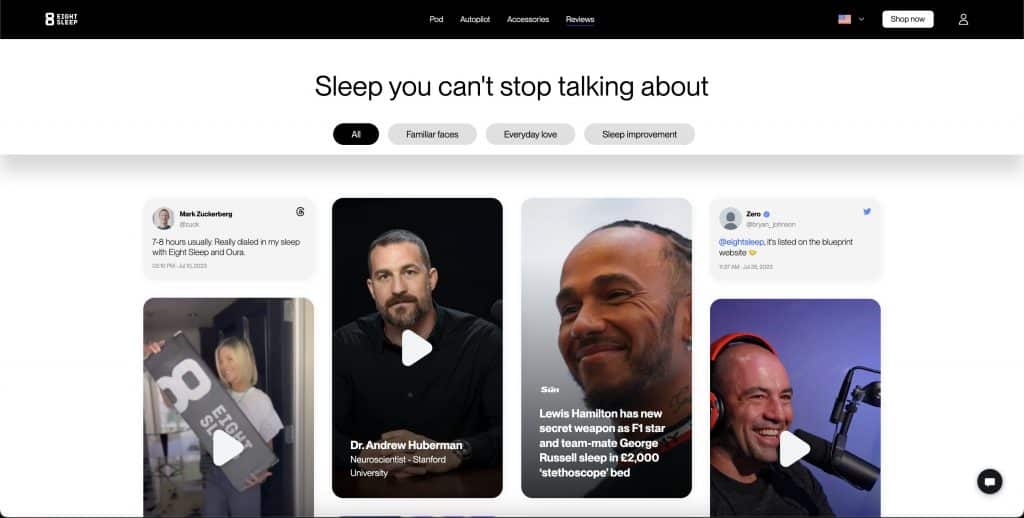
Eight Sleep’s wall of love is filled with video and text testimonials. Some of these testimonials are even from celebrities/influencers. They also have articles showcased where their brand is mentioned. A unique feature they have is the categories at the top. You can filter between 4 different topics: “All, Familiar faces, Everyday love, and Sleep Improvement”. This allows you to view the testimonials that interest you, rather than having to read and watch all the testimonials to find one that resonates with you.
This is a great example of how video testimonials can make your brand stand out, and how featuring them in one place, such as in a testimonial page, makes an impact on potential customers.
Postscript
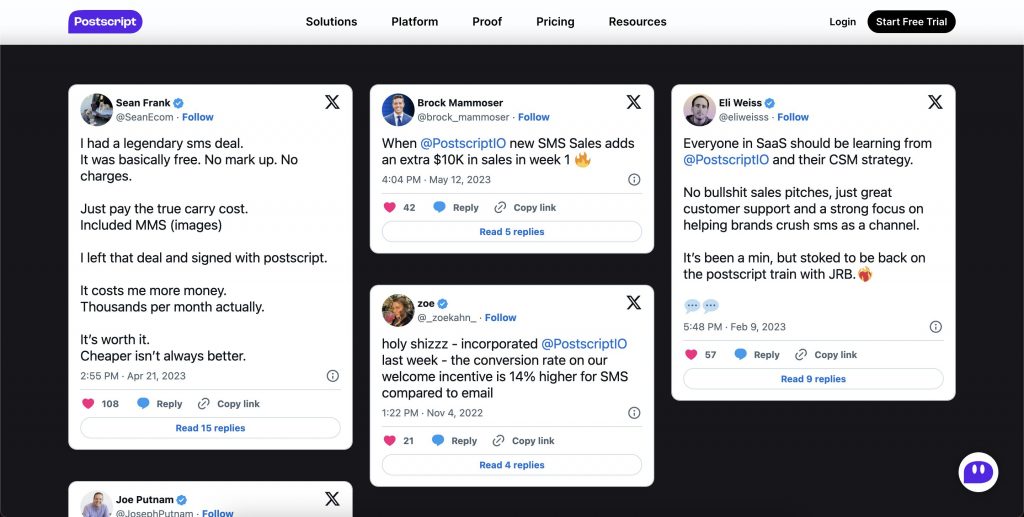
Postscript’s wall of love features posts mentioning their brand by customers on X. They also showcase testimonial quotes spread throughout the page. As seen, many customers recommend their services to their peers. This shows that their customers are happy enough with their services in order to publicly recommend them. Their wall of love is a great example of how positive social posts can leave a good impression on potential customers.
Instantly
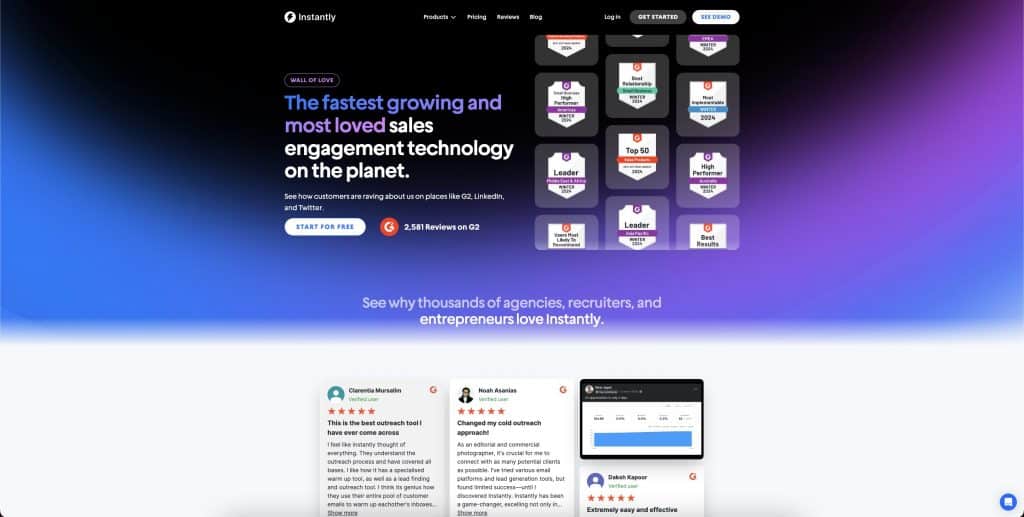
Instantly’s wall of love begins with displaying all the awards they have gotten from G2. As you scroll down, you are able to see a mix of text and image testimonials. Customers share how Instantly helped their brand improve. By using titles, you are able to look through the testimonials to find relatable content.
Additionally, this is a good example of why your brand should have a testimonial landing page. By having a dedicated testimonial page, and including how to sign up for a free trial, you are ensuring that it is easy for potential customers to make an educated decision. They will be more likely to sign up for a free trial after they read your testimonials!
GuestTouch
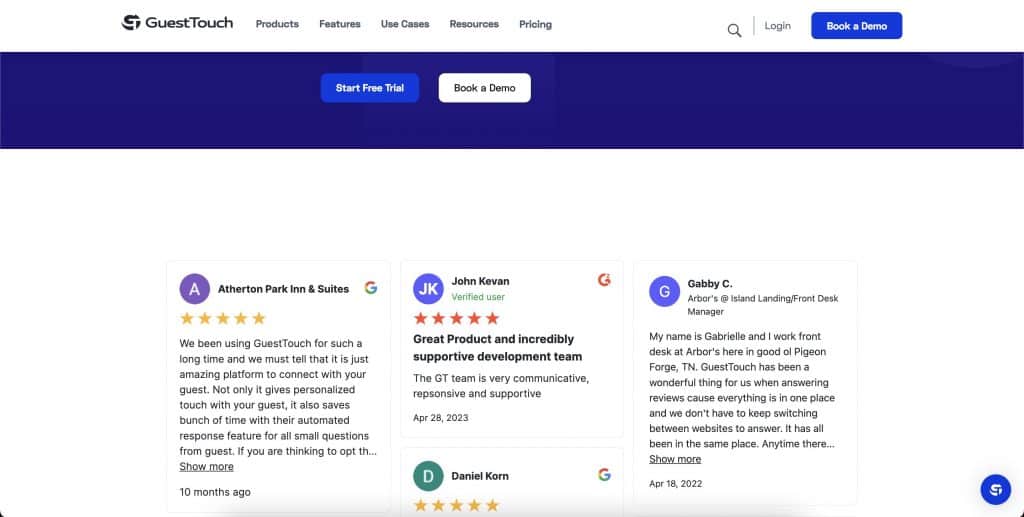
GuestTouch has a wall of love featuring text and video testimonials! At the beginning of the page, they state “Our customers’ testimonials are the best social proof we can get”. It is clear that they understand the impact of testimonials, and want to showcase them well on their site!
This testimonial page has them displayed in an organized way, ensuring that potential customers can learn all about why their customers love their brand. They also have buttons to start a free trial and/or book a demo, which is always a good idea. By placing them here, you ensure more people sign up for a free trial or book a demo.
How to Use Testimonials on Landing Pages (Not Just a Wall of Love)
While having a dedicated testimonial page is powerful, testimonials are even more effective when they are strategically placed throughout your landing pages. Instead of treating testimonials as something users must go looking for, high-performing brands integrate them exactly where doubt tends to appear.
Here’s how to use testimonials intentionally on your landing pages:
Above-the-Fold Proof
The top of your landing page is where first impressions are formed. Adding a short testimonial, star rating, or customer logos above the fold immediately establishes credibility.
When visitors see social proof right away, it reduces skepticism and signals that real people already trust your brand. This early reassurance can significantly lower bounce rates and encourage users to keep scrolling.
After Claim Placement
Every strong marketing page makes bold claims — “Increase revenue,” “Save time,” “Boost conversions.”
But claims without proof create friction.
Placing a testimonial directly after a key claim reinforces it with real-world validation. For example, if you state that your software increases productivity, follow it with a testimonial that mentions specific results. This alignment between claim and proof makes your messaging more believable and persuasive.
Before CTA Placement
Calls to action are moments of decision.
Before users click “Start Free Trial” or “Book a Demo,” they often hesitate. Including a testimonial immediately before your primary CTA helps remove last-minute doubt.
A short quote highlighting ease of use, fast results, or strong support can provide the emotional reassurance needed to move forward.
Cart and Checkout Reinforcement
Testimonials aren’t just for awareness pages.
On ecommerce websites, placing testimonials near the cart or checkout section can reduce abandonment. Customers may question product quality, delivery reliability, or overall value at this stage. Seeing positive feedback from other buyers reassures them that they are making the right choice.
This strategic reinforcement can directly impact conversion rates.
Scroll Depth Triggers
Long landing pages often introduce friction as users scroll. Attention drops, and skepticism may increase.
Smart brands use testimonials at natural scroll intervals — after feature sections, pricing explanations, or comparison tables. This creates a rhythm of claim → proof → claim → proof throughout the page.
Instead of overwhelming visitors with a massive “wall of love,” this approach integrates social proof into the decision-making journey itself.
The Key Difference
A testimonial page builds overall credibility.
Testimonials on landing pages drive conversions in real time.
When placed strategically, testimonials don’t just showcase happy customers — they actively reduce doubt at the exact moment it appears.
What Makes a High-Converting Testimonial Page?
Not all testimonial pages drive results.
Some simply collect praise.
Others actively reduce buyer hesitation and increase conversions.
A high-converting testimonial page isn’t just a collection of kind words — it’s a strategically structured trust asset designed to answer unspoken objections and reinforce decision confidence.
Here’s what separates an average testimonial page from one that actually converts.
Problem-First Storytelling
The most persuasive testimonials don’t begin with praise — they begin with a problem.
When customers describe the challenge they faced before discovering your product, readers see themselves in the story. This creates identification.
Instead of “This product is amazing,” strong testimonials say:
“We were struggling with low conversion rates and unclear attribution…”
That tension builds credibility. It shows that the customer wasn’t blindly satisfied — they had a real issue that needed solving.
Problem-first storytelling mirrors the buyer’s internal dialogue and makes the solution feel earned rather than promotional.
Specific Metrics and Concrete Outcomes
Vague statements rarely persuade. Specific numbers do.
Testimonials that include measurable results — such as “increased revenue by 38%,” “reduced churn by 22%,” or “saved 10 hours per week” — add tangible proof.
Metrics reduce ambiguity. They shift the testimonial from opinion to evidence.
Search engines also respond positively to specificity, as it signals authentic, experience-based content rather than generic marketing copy.
Emotional Micro-Moments
Conversion decisions are rarely purely rational.
High-performing testimonial pages capture small emotional cues — relief, excitement, surprise, confidence. These micro-moments make testimonials feel human.
For example:
“We finally felt in control of our marketing data.”
“For the first time, our team wasn’t stressed before launch.”
These subtle emotional signals reinforce trust because they reflect lived experience rather than scripted praise.
Before-and-After Framing
Transformation is powerful.
Effective testimonial pages clearly demonstrate change:
Before → confusion, inefficiency, uncertainty
After → clarity, growth, confidence
This contrast helps potential customers visualize their own improvement. Instead of presenting your product as a feature set, testimonials present it as a catalyst for transformation.
Transformation framing is particularly effective for SaaS, ecommerce, and service-based businesses.
Real Names, Photos, and Verifiable Identity
Trust increases when testimonials feel verifiable.
Including real names, job titles, company names, logos, and photos strengthens credibility. Anonymous praise may create skepticism, while identifiable testimonials create reassurance.
Adding LinkedIn links, company logos, or recognizable brands further reinforces authenticity.
Authenticity is not just a conversion factor — it is a search quality signal as well.
Mixed Media: Video + Text
Text testimonials are easy to scan.
Video testimonials create emotional depth.
The strongest testimonial pages combine both.
Video allows potential customers to observe tone, body language, and sincerity. Text allows quick scanning and accessibility. Together, they create layered trust.
Mixed media also increases engagement time, which can positively impact behavioral signals.
Strategic CTA Placement
A testimonial page should not feel disconnected from action.
High-converting pages place calls to action at key trust peaks:
After a powerful transformation story
After a cluster of strong testimonials
At the end of the page
This placement aligns emotional reassurance with decision moments.
Instead of forcing conversion, it supports it.
The Strategic Difference
A simple testimonial page displays satisfaction.
A high-converting testimonial page removes doubt.
It anticipates objections, reinforces claims with proof, and creates a narrative of transformation supported by real people and real outcomes.
When structured intentionally, a testimonial page becomes more than social proof — it becomes a conversion asset.
The Impact of Testimonial Pages
As seen in these testimonial page design examples, it is very impactful to have a page dedicated solely to your clients’ testimonials. Not only does it help potential customers learn about your brand, but it shows them that you care about your customers’ happiness. Plus, it makes your customers feel special that they are showcased on your website. To maximize the reach and effectiveness of your testimonial page, consider implementing testimonial SEO strategies.
Collecting testimonials and featuring them on your website is a great way to increase engagement and sales for your brand. To collect video testimonials, sign up for a free trial with Vidlo today!
Testimonial Pages & Landing Page Testimonials: Common Questions Answered
Should testimonials be on a separate page or on landing pages?
Both serve different purposes. A dedicated testimonial page builds overall brand credibility, while testimonials placed on landing pages directly support conversion decisions. The most effective strategy is combining both — using a testimonial page as a trust hub and strategically placing testimonials throughout high-intent pages.
Where should testimonials be placed on a landing page?
Testimonials work best when placed near moments of decision or doubt. This includes above the fold for immediate credibility, after bold claims to reinforce messaging, before primary CTAs to reduce hesitation, and near pricing or checkout sections to support final decisions.
Are video testimonials more effective than written reviews?
Video testimonials often create stronger emotional engagement because viewers can see tone, expression, and authenticity. However, written testimonials are easier to scan and consume quickly. A combination of both tends to perform best, balancing emotional depth with readability.
How many testimonials should a testimonial page include?
There is no fixed number, but density matters. A page with only two testimonials may feel weak, while an overwhelming wall without structure can reduce clarity. Organizing testimonials by category, industry, or outcome makes larger volumes more effective.
What makes a testimonial more persuasive?
Specificity is key. Testimonials that mention clear problems, measurable results, and personal experiences are more convincing than vague praise. Including real names, job titles, and company details further strengthens credibility.
Do testimonial pages improve SEO?
Yes, when optimized properly. Testimonial pages add unique, user-focused content that strengthens topical relevance around social proof and customer validation. When structured with clear headings, internal links, and strategic keywords, they can support both search visibility and conversion performance.